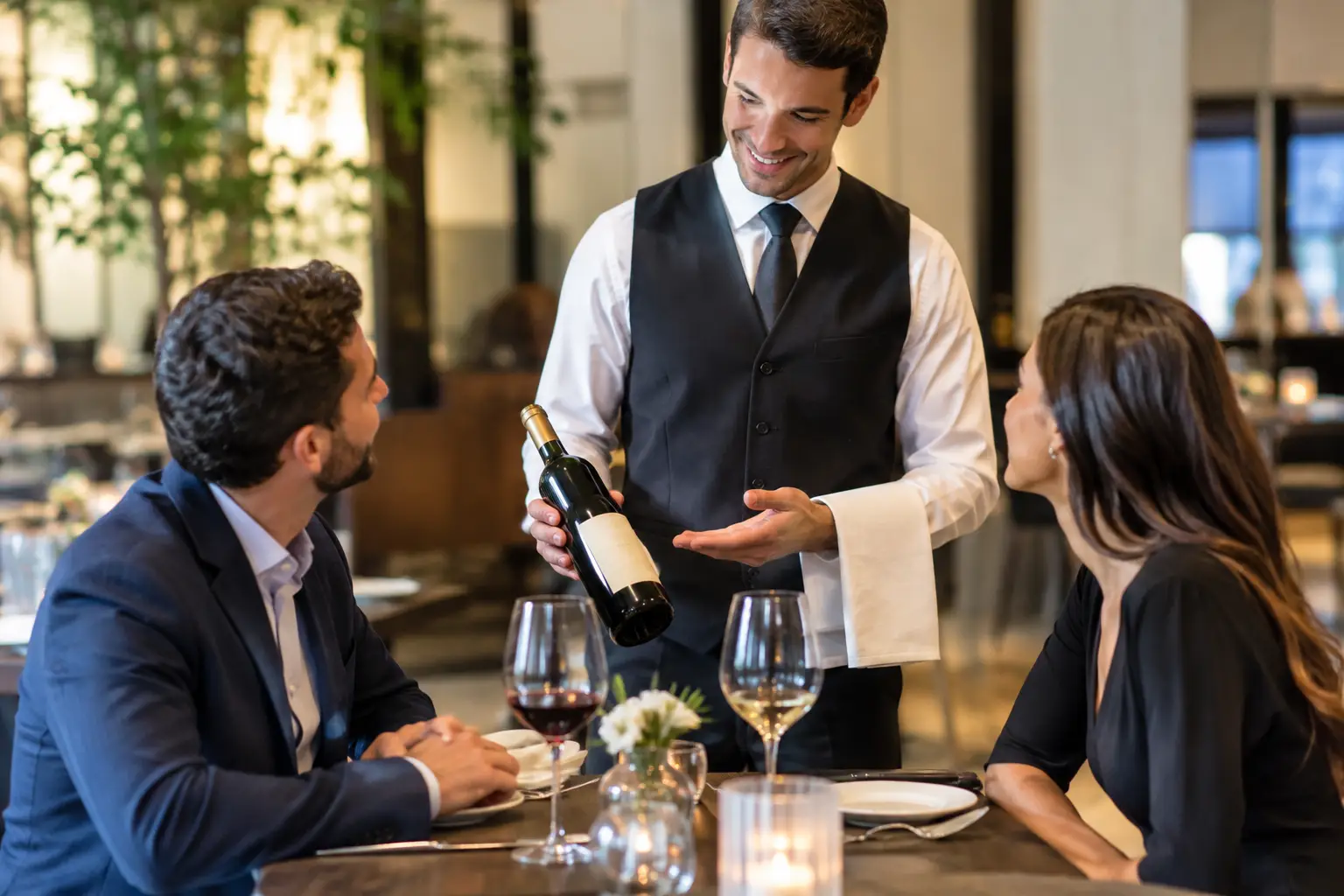
The missed sale rarely looks dramatic. It is the server who answers, “We have several wines,” instead of recommending the bottle that suits the guest’s steak. It is the host who never mentions the terrace tasting menu. It is the bartender who knows the premium spirit exists but cannot explain why it earns its price. Across a busy week, those small moments become meaningful revenue leakage. This restaurant upselling case examines why familiar training approaches often fail on the floor and what operators can do differently.
The revenue problem behind weak upselling
Most restaurant leaders do not have an upselling problem because their teams lack enthusiasm. They have a knowledge, timing, and execution problem.
A server may have attended menu training two weeks ago, passed a short quiz, and still hesitate during service. Under pressure, they revert to safe language: “Would you like anything else?” That question invites a no. A useful recommendation requires faster recall: what is available, what margin it carries, what guest need it solves, and when it should be offered.
Consider a representative 120-cover dinner operation with an average check of $68. If only one in ten tables accepts a $12 upgrade - an appetizer to share, a premium side, a better wine pairing, or dessert - the additional revenue is $144 per service. Across 300 operating days, that is $43,200 before considering the effect on beverage mix, repeat visits, or multi-outlet consistency.
The exact number will vary by concept, price point, guest profile, and service model. A quick-service venue should not copy the language of a luxury dining room, and a high-volume hotel breakfast operation needs different prompts than a chef-led tasting menu. The commercial principle is the same: every missed recommendation is a lost opportunity to improve both guest experience and check average.
A restaurant upselling case: where execution broke down
Imagine a restaurant group with four locations, a seasonal menu, a high percentage of new hires, and managers already stretched by service recovery, staffing, ordering, and daily reporting. Leadership asks each location to improve average check, yet results remain uneven. One venue consistently sells premium add-ons. Another, with comparable traffic and menu pricing, does not.
The first instinct is often to schedule more sales training. That may help, but it does not diagnose the operating condition causing the gap.
A closer review typically reveals several failures working together. Pre-shift briefings mention specials but do not explain the guest cue or recommendation language. New team members learn product facts from different managers. Beverage knowledge is strongest among a few experienced servers. Allergens and modifications consume attention, so staff avoid recommending unfamiliar dishes. Managers cannot see which knowledge gaps are recurring, by outlet, role, or shift.
The result is not simply low sales confidence. It is inconsistent operational knowledge.
At the stronger location, the team may not be more naturally talented. They may simply begin service with greater clarity: which items need focus, which pairings suit the menu, which substitutions are safe, and how to frame a recommendation without sounding scripted. That clarity is operationally managed, not left to personality.
The old training cycle creates a predictable gap
Traditional restaurant training is commonly event-based. A menu launch happens. A manager explains new dishes. Staff sign an acknowledgment. Then service moves on.
But upselling performance is not decided at the training session. It is decided at 7:42 p.m. when a guest says they are sharing a starter, asks whether a fish dish is filling, or pauses over a wine list. If the answer is not accessible in that moment, training completion does not protect revenue.
This is why operators should separate exposure from readiness. Exposure means a team member has seen the information. Readiness means they can apply it accurately, confidently, and in the right service moment.
What changed when the operation treated upselling as a system
The group in this restaurant upselling case did not ask staff to “sell more.” It established a repeatable revenue-optimization workflow built around the shifts where performance was being lost.
First, leaders defined a small number of commercially relevant recommendations for each meal period. Dinner staff did not need to memorize every possible pairing at once. They needed clear guidance on priority dishes, high-value upgrades, relevant guest cues, and language that felt natural for the brand.
For example, rather than telling servers to push a side dish, the briefing could frame it as: guests ordering the grilled fish often appreciate a vegetable side because the entrée is intentionally light. That is a service-led recommendation. It helps the guest make a more informed choice while increasing spend appropriately.
Second, the operation made knowledge available as part of the daily nervous system, not as a binder behind the host stand. Team members needed immediate answers about ingredients, flavor profiles, pairings, and allergen-safe alternatives. This matters because a server who is uncertain about a dish will rarely recommend it with conviction.
Third, managers used daily visibility to identify friction. Were teams struggling with beverage descriptions? Were premium dessert sales declining after a menu change? Did one outlet have strong appetizer attachment but weak wine sales? These questions turn upselling from a vague performance demand into a measurable operational conversation.
A Hospitality Operational Intelligence platform supports this approach by connecting OI Knowledge, OI Briefings, and OI Insights. The technology is not the point. The operating discipline is. Leaders need one reliable environment where standards, commercial priorities, team questions, and performance signals can inform the next shift.
Measure behaviors before judging the result
Average check is essential, but it is a lagging measure. A poor result can be caused by lower traffic, a different guest mix, weather, events, or changes in covers. Looking only at the final number can lead managers to pressure staff without addressing the reason performance changed.
More useful leading indicators include recommendation confidence, completion of product knowledge refreshers, priority item attachment by shift, and manager observations of service language. If data access is limited, managers can still audit a sample of tables during service: Was a relevant recommendation offered? Was it specific? Did it match the guest’s order? Was it delivered at the right time?
The objective is not to force an add-on at every table. Aggressive selling damages trust, particularly in luxury and relationship-led hospitality. The objective is to make the right recommendation feel like informed care.
Build recommendations around guest value, not scripts
Scripted upselling fails because guests recognize it immediately and employees resent repeating it. Consistent service does not mean identical words. It means every team member understands the commercial intent and the standards behind it.
A good recommendation has three parts: it is relevant to the guest’s choice, supported by accurate product knowledge, and delivered at an appropriate point in the experience. A guest celebrating an anniversary may value champagne by the glass. A business lunch guest may value speed and a clearly portioned entrée. A family may benefit from sharing options and easy modifications.
This is also where compliance and revenue meet. Allergen uncertainty can make staff understandably cautious. When operational knowledge is current and easy to verify, employees can recommend with greater confidence while protecting guest safety. No sales target justifies guessing about ingredients, cross-contact, or dietary requirements.
For multi-unit operations, the most effective approach combines a common commercial standard with local flexibility. Every location can follow the same principles for menu knowledge, service timing, and daily briefing. The actual recommendations should reflect outlet identity, local demand, inventory realities, and the guest occasion.
The manager’s role is to remove friction
Managers should coach the moment, not merely announce the target. A pre-shift briefing that says, “We need to raise average check tonight,” gives the team a number but no operational direction. A better briefing identifies two priority recommendations, explains who they suit, rehearses one natural phrase, and clarifies any product or allergen updates that could affect service.
After service, the discussion should be equally specific. Ask what guests responded to, where team members hesitated, and whether a menu item created confusion. Capture the answer while it is fresh. Repeated questions are not minor interruptions. They are evidence of a knowledge gap that can be corrected before it becomes standard practice.
This is the difference between a sales campaign and Operational Intelligence. A campaign asks for a result. OI gives hospitality leaders the visibility and operational structure to improve the conditions that create the result.
The next strong recommendation will not come from asking servers to be more persuasive. It will come from giving them the knowledge, context, and confidence to make service feel more personal at the exact moment a guest needs guidance.