A guest asks whether the sea bass is dairy-free, where it was sourced, what makes the sauce distinctive, and which wine will suit it. The server has seconds to answer. A vague response can lose a sale. A wrong response can create an allergen incident. This is the commercial and operational test that restaurant menu knowledge platforms must pass: not whether information exists somewhere, but whether teams can apply the right information confidently during service.
For restaurant groups, hotels, resorts, and multi-outlet food and beverage operations, menu knowledge is not a training topic that can be addressed once during induction. It is a daily operating discipline. Menus change, suppliers substitute ingredients, specials rotate, staff move between outlets, and seasonal teams arrive with different levels of experience. When knowledge sits in folders, printed binders, private manager messages, or the memory of a few long-serving employees, service consistency becomes fragile.
Why Menu Knowledge Becomes an Operating Risk
Most operators recognize poor menu knowledge when it reaches the floor. Servers hesitate during table conversation. A bartender cannot explain a premium spirit. A guest receives conflicting allergen guidance from two employees. Managers spend pre-shift repeating the same information, then answer the same questions during peak service.
The hidden cost is larger than one missed recommendation. Weak menu knowledge affects average check, guest confidence, speed of service, complaint recovery, and manager productivity. In luxury and high-volume environments alike, it also creates a leadership blind spot: executives may know that a menu has been issued, but not whether teams understand it well enough to represent it accurately.
A 20-item menu can contain hundreds of operational knowledge points. Ingredients, preparation methods, allergens, dietary suitability, provenance, garnish, portion expectations, menu language, pairing opportunities, and modification limits all matter. Add a bar program, room service offer, events menu, and regional variations across multiple properties, and the knowledge burden rises quickly.
Traditional training materials have a role, but they rarely keep pace with service reality. A PDF can document a dish. It cannot tell an employee, at the moment of a guest question, what changed this morning, which answer is approved, or where their knowledge gap sits relative to the rest of the team.
What Restaurant Menu Knowledge Platforms Should Do
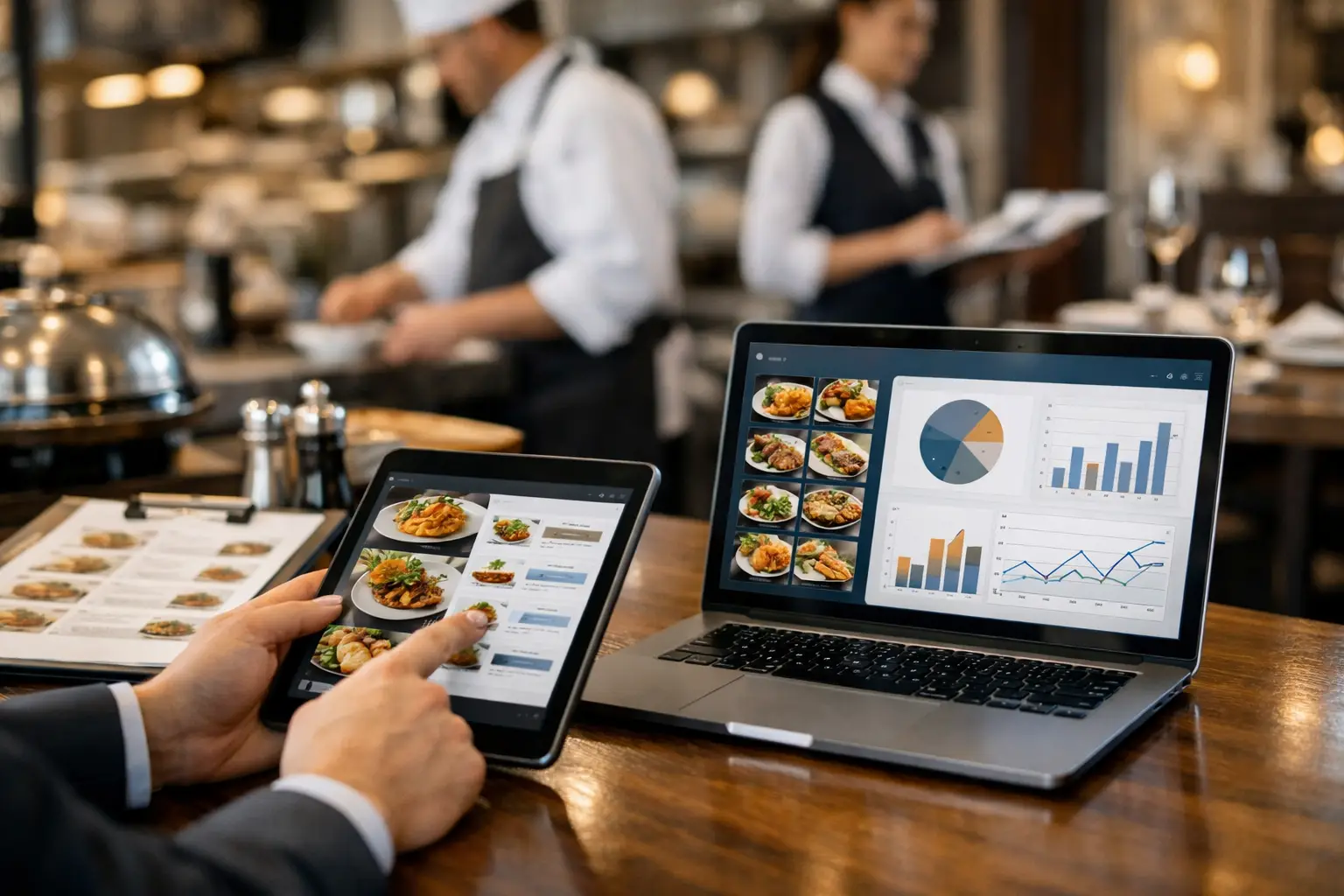
The strongest restaurant menu knowledge platforms are not digital recipe books and should not become another disconnected training destination. They should function as part of the restaurant's daily nervous system: a controlled source of operational truth that connects menu knowledge to briefing, service, coaching, compliance, and leadership visibility.
This starts with structured OI Knowledge. Each menu item needs more than a description. Teams need concise, service-ready guidance that distinguishes guest-facing language from kitchen specifications. A server may need to know that a dish contains nuts, can be prepared without a certain garnish, has a specific texture, and pairs naturally with a particular beverage. A manager needs to know which details are non-negotiable, which substitutions are permitted, and when an answer must be verified with the chef or duty leader.
The platform should also make change management operational. If a supplier change affects an ingredient, allergen profile, or product story, the updated information must reach the relevant teams in a way that is visible, timely, and measurable. Publishing a revised document is not confirmation of comprehension.
Service Answers Need Guardrails
Allergen knowledge deserves special treatment. It is not enough to provide a simple dietary tag beside each dish. Cross-contact risk, recipe variation, production conditions, and local policy can change what a team member may safely promise. A well-designed system gives staff clear approved language, escalation instructions, and an expectation to verify when a guest identifies a serious allergy.
That distinction protects both the guest and the employee. It prevents the dangerous habit of guessing, while avoiding the opposite problem of staff defaulting to “I don’t know” when the required information is available. The objective is confident service with disciplined escalation.
Knowledge Must Support Revenue, Not Just Compliance
Menu knowledge has a direct revenue role. A team that can describe a dish with precision can create desire. A team that understands the relationship between menu items can recommend a side, beverage, aperitif, or dessert in a way that feels relevant rather than scripted.
However, the best approach depends on the concept. A fine-dining venue may prioritize provenance, culinary technique, and pairing language. A resort pool outlet may need fast, clear dietary answers and practical bundle recommendations. A high-volume restaurant may focus on the top conversion opportunities that lift average check without slowing table turns. The platform should reflect the outlet's service model rather than impose one generic sales script.
From Onboarding Content to OI Briefings
New employees need menu knowledge early, but onboarding alone cannot carry the operational load. Staff forget details, menus evolve, and employees who were strong in one outlet may be unfamiliar with another. OI Onboarding should establish the core knowledge standard, then OI Briefings should keep it current.
An effective briefing does not try to reteach the entire menu before every shift. It highlights the information most likely to matter that day: a new special, a sold-out item, a supplier change, a high-margin recommendation, a guest complaint trend, or a known area of confusion. This respects the reality of pre-service preparation while making briefings more useful than a rushed read-through of yesterday’s notes.
For multilingual teams, clarity matters more than volume. Plain, consistent language, visual support where appropriate, and short confirmation checks are generally more effective than long technical descriptions. The measure is not whether employees completed content. The measure is whether they can use the information accurately in a real guest interaction.
The Manager Visibility Most Teams Are Missing
Managers should not need to wait for a mystery-shopper report, a complaint, or an allergen near-miss to discover a knowledge gap. Hospitality Operational Intelligence creates a clearer view of where operational attention is needed.
OI Reports can reveal whether teams understand a new menu launch, whether one outlet is struggling with a particular category, or whether recurring questions point to unclear content. OI Insights can help leaders identify patterns: perhaps beverage pairing knowledge is weak across dinner teams, perhaps a recently introduced vegan dish is creating repeated guest questions, or perhaps seasonal staff need reinforcement on approved allergen escalation.
This visibility changes the manager’s role. Instead of repeatedly delivering blanket retraining, leaders can coach with intent. A five-minute pre-shift intervention focused on one recurring gap is more valuable than another generic reminder to “know the menu.”
There is a trade-off. Over-measuring every detail can turn knowledge into an administrative burden and encourage staff to memorize answers without understanding them. Leaders should track the knowledge that has operational consequence: safety, guest confidence, revenue opportunities, brand standards, and recurring service failures. The rest should remain accessible without becoming a reporting exercise.
A Practical Standard for Selecting a Platform
Before adopting a menu knowledge solution, operators should test it against the realities of a busy service. Can a server find an approved answer quickly? Can a manager update a menu change once and know the right teams have seen it? Can the system distinguish allergen-critical information from general product storytelling? Can leadership see comprehension and recurring gaps across outlets without creating extra reporting work?
It should also connect with the wider operating environment. Menu knowledge does not live separately from SOPs, onboarding, quality standards, shift communication, and audit readiness. A fragmented stack may solve one issue while creating another login, another dashboard, and another process that managers must chase.
SmartHospitality.AI approaches this through Hospitality Operational Intelligence: connecting OI Knowledge with onboarding, briefings, operational standards, reporting, and decision support. The technology supports the work, but the operational outcome remains the point - better-informed teams, stronger guest conversations, safer service, and managers who can see where attention is needed.
The real test of menu knowledge is not a completed module or a signed training record. It is the moment a guest asks a detailed question and receives a clear, accurate answer from a confident team member. Build the operating system behind that moment, and the results show up in both guest trust and commercial performance.