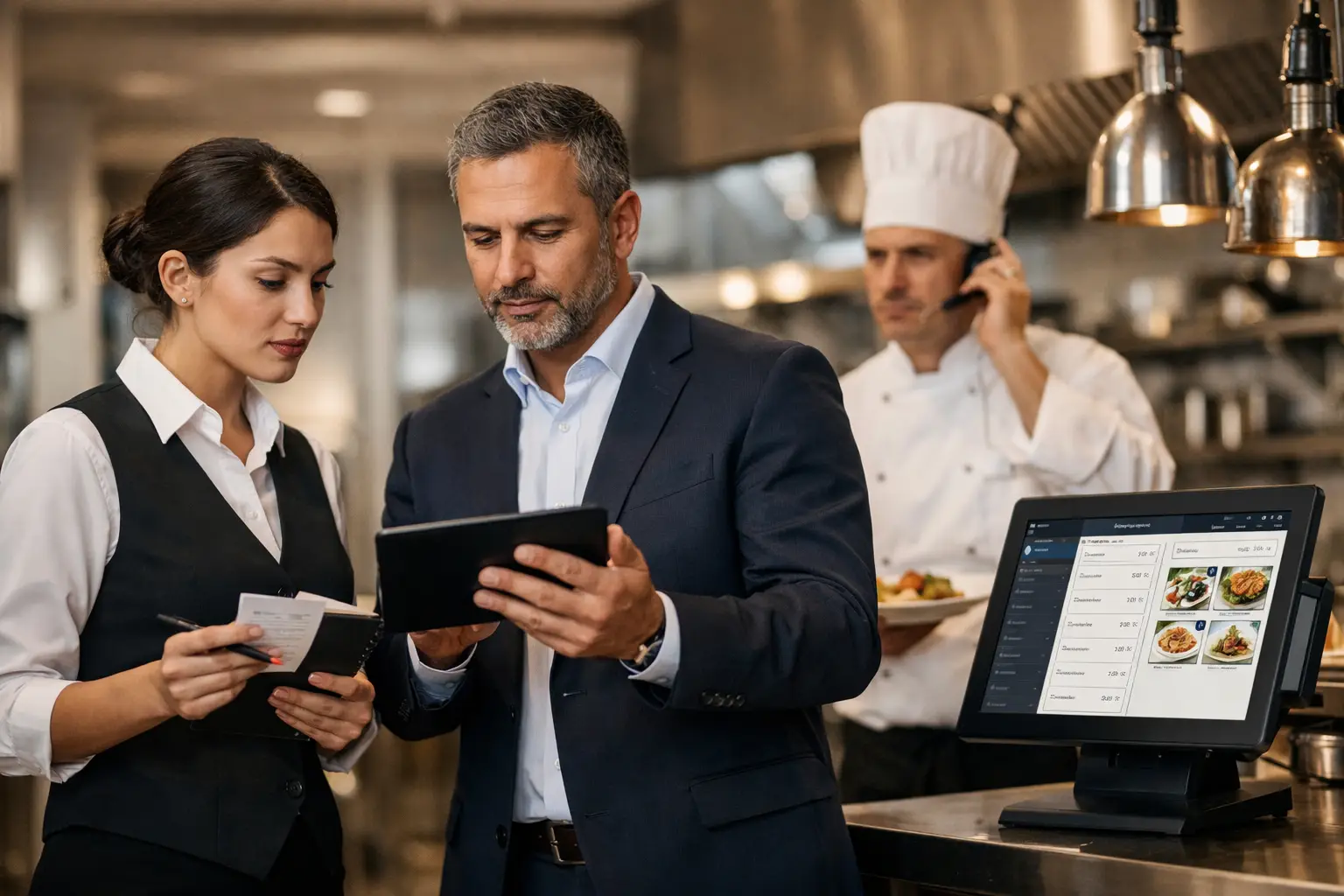
At 8:17 p.m., a server verbally tells the pass that Table 24 needs the sea bass without butter. The modification is not entered correctly, the runner receives only part of the message, and the plate reaches a guest with an allergen concern. What appears to be a minor order communication error can become a safety incident, a recovery cost, a comped check, and a lasting loss of trust.
Knowing how to prevent order communication errors is therefore not simply a point-of-sale discipline. It is a hospitality operations issue involving menu knowledge, language clarity, workflow design, accountability, and manager visibility. For hotels, restaurants, resorts, cruise operations, and multi-outlet groups, every missed detail exposes both the guest experience and the operating margin.
Why Order Communication Errors Keep Repeating
Most operators do not have a communication problem because their teams do not care. They have a system problem because important information is expected to survive too many handoffs. A guest speaks to a server. The server enters an order. The kitchen reads a ticket. A chef calls the pass. A runner delivers the plate. In a hotel, room service, banquets, minibar, and concierge requests may introduce even more transitions.
Each transition creates an opportunity for ambiguity. “No dairy” may mean no cheese to one employee, but no butter, cream, yogurt, or cross-contact risk to another. “Gluten-free” can be treated as a preference by an inexperienced team member and as a serious medical requirement by the guest. A steak temperature change called across a loud dining room can disappear before the ticket is fired.
The cost also extends beyond the individual check. Incorrect orders slow table turns, create food waste, distract managers during peak periods, and place pressure on already stretched kitchen teams. When the same questions and mistakes recur, leadership is left with a blind spot: is the issue menu knowledge, unclear SOPs, poor briefing discipline, a technology configuration problem, or weak follow-through?
How to Prevent Order Communication Errors at the Source
Prevention begins before the first guest order. Teams need one clear operational standard for how requests are heard, confirmed, recorded, produced, and delivered. Vague expectations such as “communicate better” do not change service-floor behavior. Defined language and repeatable verification do.
Build a closed-loop order process
Closed-loop communication means the message is confirmed by the person receiving it, not merely sent by the person giving it. A server should repeat a material modification back to the guest. The order must be entered with the correct modifier, not as a free-text note when a structured option exists. The kitchen must be able to see the instruction in a consistent location, and the runner must confirm the relevant details before delivery.
This is particularly important for allergen requests, dietary needs, cooking temperatures, package inclusions, VIP preferences, and timed courses. The higher the consequence of an error, the less the operation should rely on memory or informal verbal communication.
For example, a useful service standard might require the server to say: “To confirm, the pasta will be prepared without dairy, and I have alerted the kitchen.” That verbal confirmation protects the guest, reinforces the employee’s responsibility, and gives the team an immediate opportunity to correct a misunderstanding.
Standardize the words that matter
Hospitality teams often work across multiple languages, experience levels, and outlets. That diversity is a strength, but it makes assumed terminology risky. Establish standard wording for frequent requests and ensure the same terms appear in menus, POS modifiers, kitchen tickets, pre-shift briefings, and training materials.
Distinguish clearly between an allergy, intolerance, dietary preference, and ingredient omission. Do not allow staff to improvise the response. A new host should know what to say when a guest asks whether a dish contains nuts. A bartender should know how to record a no-alcohol request without ambiguity. A room service agent should understand whether “no pork” affects garnish, stock, sauces, and cross-contact procedures.
Standardization should not make service sound scripted. It gives employees a dependable operational language so they can remain warm, confident, and precise with guests.
Remove avoidable free-text orders
Free-text notes have a place, especially for genuinely unusual requests. They should not be the default for common modifications. When teams routinely type “no cheese,” “allergy,” or “rush” into open notes, reporting becomes weak and the meaning may be interpreted differently across outlets or shifts.
Review your top modifiers and recurring remakes. If an instruction appears every day, turn it into a clear, selectable workflow where possible. This improves ticket readability, reduces keying variation, and gives managers useful data on demand patterns and operational friction.
There is a trade-off. Too many modifiers can make order entry slow and cluttered, especially in high-volume bars or quick-service settings. The answer is not to create a field for every imaginable request. Build structured options around high-risk, high-frequency, and high-cost details, then preserve an escalation path for exceptions.
Give Every Handoff an Owner
An order is not “communicated” because it appears on a screen. It is communicated when the next person understands the instruction and owns the next action.
Define ownership at each point in the chain. The server owns accurate capture and guest confirmation. The expo or pass lead owns verification before release. The runner owns final delivery confirmation. A manager owns escalation when a request falls outside approved procedures or when the team cannot confidently guarantee a safe outcome.
This distinction matters during peak service. If everyone assumes someone else has checked the allergen note, no one has checked it. If runners are expected to know every modifier but receive no clear signal at the pass, the process fails by design.
A practical control is to establish a visual or verbal verification rule for high-risk orders. Depending on the operation, that may include a distinctive ticket marker, a separate allergy dish marker, direct chef-to-server confirmation, or manager release. The method can differ by outlet. The non-negotiable point is that the control must be visible, understood, and consistently applied.
Use Pre-Shift Briefings for Live Risk, Not Generic Reminders
Pre-shift briefings are one of the most underused controls in restaurant and hotel operations. Too often, they repeat broad service messages while the most relevant information stays scattered across emails, group chats, and manager memory.
A focused briefing should address what can create errors that day: 86 covers arriving within 45 minutes, a menu item with a substitute ingredient, a sold-out product, a banquet group with declared dietary requirements, a new seasonal cocktail, or an inexperienced employee assigned to a key station. These are not administrative details. They are live operating conditions.
Ask staff to repeat back the most critical changes. A two-minute knowledge check is more valuable than a manager asking, “Any questions?” to a silent room. Teams should also know exactly where to find approved ingredient, allergen, and service information once the shift begins.
Hospitality Operational Intelligence strengthens this discipline by bringing current OI Knowledge, OI Briefings, and operational standards into a connected daily workflow. Rather than asking managers to repeatedly answer the same menu, SOP, and guest-request questions, the operation can make verified guidance available where decisions happen.
Train for Judgment, Not Just Order Entry
An employee can know how to press a POS button and still be unprepared to handle a complex request. Training must cover the reasoning behind the process: why a modifier matters, when a request requires escalation, what cannot be promised, and how a communication lapse affects the kitchen, the guest, and the brand.
Use realistic scenarios. A guest says they have a shellfish allergy but orders a fried item. A regular guest asks for their usual cocktail, but a new bartender does not know the recipe. A banquet captain receives a last-minute vegan meal request after production has begun. These moments test operational judgment, not just recall.
Managers should review errors without turning every incident into blame. The right question is: what failed in the system? If three employees misunderstand a menu term, retrain the team and correct the source material. If tickets are difficult to read, redesign the ticket flow. If the same outlet produces repeated remakes, investigate its shift handoffs, staffing pattern, and manager controls.
Measure the Signals Before They Become Guest Complaints
Many order errors are visible long before they appear in online reviews or guest recovery reports. Track voids, remakes, returns, comps, delayed courses, allergen escalations, modifier overrides, and frequent manager interventions. Review the data by outlet, shift, meal period, menu item, and service station.
Numbers alone do not provide the answer. A high volume of “no onion” modifications may reflect a menu design opportunity rather than a staff problem. Repeated missing sides at lunch may indicate a rushed expo process. A spike in remakes after a menu launch can reveal that employees were not given enough product knowledge before service.
This is where Operational Intelligence becomes the daily nervous system for hospitality operations. OI Reports and OI Insights can connect recurring service-floor signals with training content, SOP changes, briefing priorities, and manager action. Leaders gain more than a record of what went wrong. They gain a clearer view of where consistency is breaking down and what intervention is likely to work.
Make Escalation a Sign of Professionalism
Teams sometimes avoid escalation because they fear slowing service or appearing inexperienced. That instinct creates risk. In a well-run operation, asking for clarification is a professional control, not a weakness.
Give employees explicit authority to pause and verify when an order involves an allergen, unclear modifier, unavailable item, unusual guest request, or conflicting instruction. The guest may wait an extra minute for confirmation. They should never receive a confident but incorrect answer.
The best hospitality teams do not depend on heroic memory during a busy shift. They build a shared operating language, clear handoffs, current knowledge, and visible controls that allow people to make the right decision under pressure. That is how service becomes more consistent without losing the human judgment that guests remember.