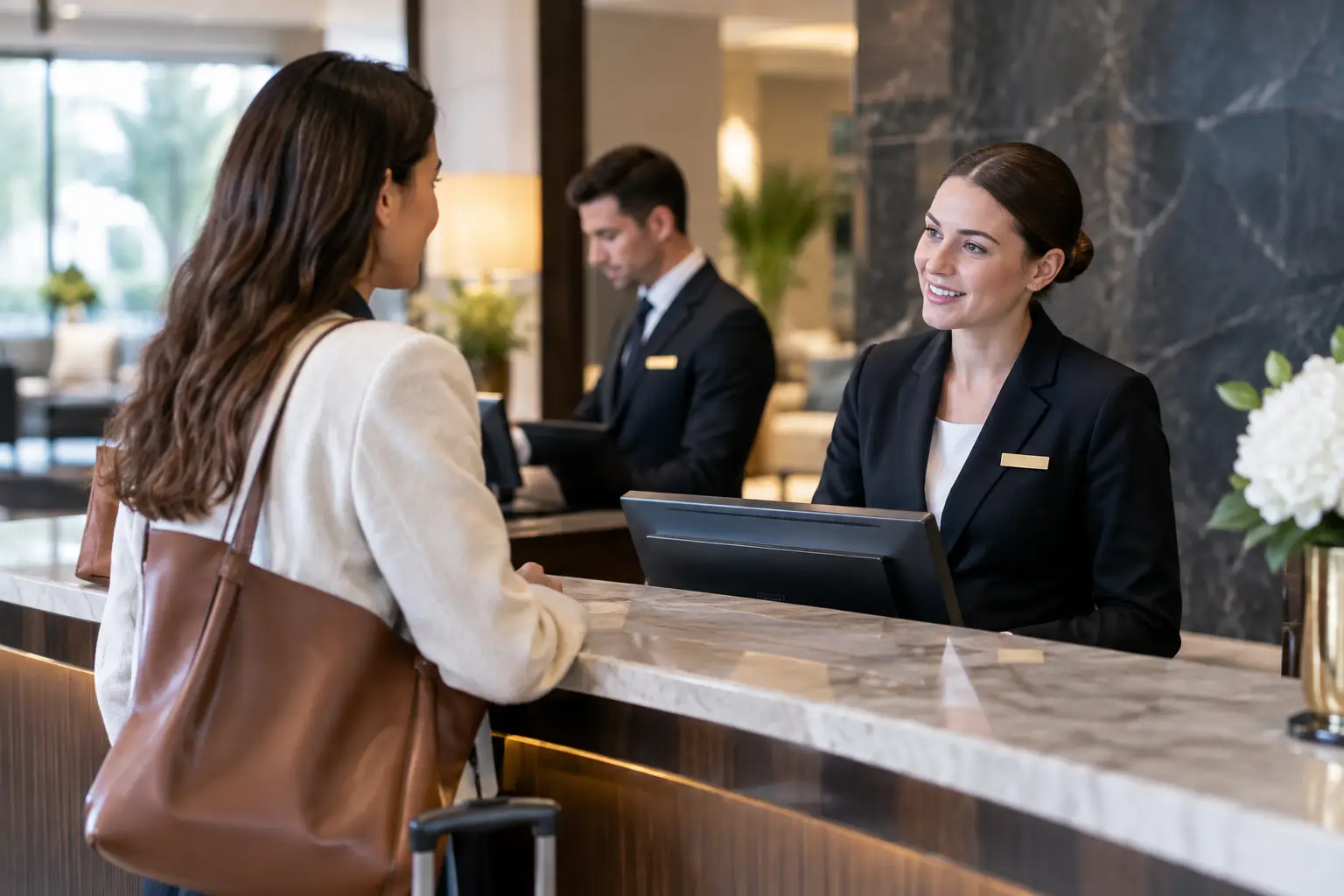
A guest asks two team members the same question: whether a menu item contains nuts, whether late checkout is possible, or what is included in a package. They receive two different answers. The immediate issue may seem small, but this is what causes inconsistent guest service to become a commercial, safety, and reputation problem.
For the guest, inconsistency feels like uncertainty. For the operator, it signals a breakdown somewhere between the standard on paper and execution on the floor. In luxury hotels, restaurants, resorts, and cruise operations, that gap can affect guest trust, review scores, allergen safety, upselling, complaint recovery, and manager time.
The difficult truth is that inconsistent service is rarely caused by one disengaged employee. It is usually the visible result of fragmented knowledge, unclear ownership, rushed onboarding, weak shift communication, and limited operational visibility.
What Causes Inconsistent Guest Service?
Service consistency depends on people having the right knowledge, context, and confidence at the exact moment a guest needs an answer. When any one of those elements is missing, standards become dependent on who happens to be working.
Standards exist, but are not operationalized
Many hospitality businesses have excellent SOPs, brand manuals, and training documents. The problem is not the absence of standards. It is that critical standards are stored in places teams do not consult during a busy shift: shared drives, printed binders, old email threads, or a manager's memory.
A room service agent may know the delivery sequence but not the latest allergy escalation procedure. A server may understand the tasting notes for a wine list but miss the current pairing recommendation or promotional priority. A front desk associate may offer an amenity differently from the concierge team.
When a standard cannot be found and applied in seconds, staff default to habit, assumption, or the nearest available colleague. That is not a people problem. It is a knowledge management problem.
Onboarding teaches tasks, not operating judgment
New employees often receive a condensed version of months of operational learning in a few shifts. They may shadow a strong colleague, complete introductory training, and be expected to perform before they understand the full guest journey.
This is especially risky in high-turnover environments, seasonal properties, multi-outlet venues, and organizations with multilingual teams. The employee learns how to take an order, check in a guest, or set a table. They may not learn why a particular recovery threshold exists, which questions require manager escalation, or how to communicate a change in policy without weakening the guest relationship.
Good onboarding is not simply a calendar event. It is a controlled transition from observation to independent execution, supported by accessible OI Knowledge and clear verification of what the person can apply on shift.
Pre-shift briefings do not reach the whole operation
The pre-shift meeting is one of hospitality's most valuable management moments. It is also one of the most inconsistent. A briefing may be excellent in the main restaurant and absent in the lobby bar. A manager may explain VIP arrivals to the morning team, but the evening team receives only a partial handover.
Without a reliable briefing rhythm, teams miss the details that shape the guest experience: sold-out items, special events, maintenance constraints, dietary alerts, group movements, service recovery notes, and revenue priorities. The result is not merely a missed upsell. It is a guest hearing, “I wasn't told,” from a team member who should have been prepared.
Managers become the operation's memory bank
In many properties, experienced managers carry the answers to hundreds of recurring questions. Staff ask them where to find a policy, how to handle a complaint, what to recommend, who approved an exception, or what changed after yesterday's leadership meeting.
This creates a hidden dependency. The operation may look controlled when the manager is present, then become variable during a day off, a busy service period, or an opening shift led by a less experienced supervisor.
Manager expertise is essential, but it should be used for judgment, coaching, and escalation - not repeatedly retrieving routine operational knowledge. When leaders are forced into constant answer-desk work, they lose time for floor observation, staff development, and commercial decision-making.
Departments optimize locally instead of serving one guest journey
Guests do not experience departments. They experience one brand. A guest may book through reservations, arrive through valet, check in at reception, dine in the restaurant, request housekeeping, and raise a concern with the duty manager. Every handoff either reinforces confidence or exposes inconsistency.
Silos create predictable friction. Sales may promise a benefit that operations has not briefed. The banquet team may receive a revised event order while culinary or service does not. The restaurant may have an updated allergen matrix, but room service is using an earlier version. Each team can be working hard and still produce an uneven experience.
The more outlets, properties, concepts, and languages an organization manages, the greater this risk becomes. Central standards matter, but local teams also need current, role-specific guidance that reflects their service environment.
Measurement focuses on outcomes, not the behaviors creating them
Guest satisfaction scores, online reviews, complaint volume, and mystery-shopper results are useful. But they are lagging indicators. By the time a score declines, the inconsistent behavior has often been repeated across multiple shifts.
Operators need visibility into the leading indicators: whether staff can access current procedures, whether briefings are completed and understood, where knowledge questions recur, which standards generate the most uncertainty, and whether one outlet is executing differently from another.
A low upselling result, for example, may not be a motivation issue. It may show that the team does not know the product story, lacks confidence with objections, or was never briefed on the commercial focus for that day. Treating every performance gap as a coaching issue wastes time and misses the root cause.
The Hidden Cost of Service Variation
Inconsistent guest service creates revenue leakage long before it becomes a formal complaint. When teams give unclear answers, hesitate on recommendations, or fail to recognize preferences, guests spend less and trust less. When service recovery differs by manager or outlet, the business creates avoidable compensation costs and an uneven brand promise.
The compliance exposure can be more serious. Allergen information, food safety steps, privacy procedures, cash controls, and incident reporting cannot depend on memory or tenure. A standard that is applied correctly only by experienced employees is not a controlled standard.
There is also a leadership cost. General managers and operations directors can be misled by a property that appears calm at peak moments because capable individuals are compensating for weak systems. When those individuals leave, take vacation, or transfer, the underlying gap becomes visible.
Building Service Consistency Into Daily Operations
The answer is not more documents or more generic training content. It is creating an operating environment where teams receive current guidance, understand how it applies to their role, and managers can see where execution is breaking down.
Start by identifying the moments that carry the greatest guest, safety, and revenue risk. These usually include arrivals, complaint recovery, allergen communication, VIP recognition, handovers, product recommendations, payment handling, and service changes during peak periods. For each moment, define one clear standard, the owner of that standard, and the source of truth staff should use.
Then make operational knowledge usable in the flow of work. A bartender needs a quick answer about a new cocktail's ingredients. A front desk agent needs the current protocol for a room move. A banquet captain needs the latest event instruction before doors open. The information should be accurate, approved, easy to locate, and available in language that the team can understand.
Pre-shift communication should also be treated as an execution tool, not a ritual. Strong OI Briefings clarify the day's priorities, guest risks, commercial opportunities, and changes to standard operating procedures. Just as importantly, they create a record of what was communicated and where follow-up is required.
Finally, leaders need operating intelligence, not just end-of-month reporting. Repeated questions, missed knowledge areas, inconsistent audit results, and outlet-level variation are valuable signals. They show where a standard may be unclear, where onboarding needs reinforcement, or where a manager needs support before the issue reaches the guest.
Operational Intelligence Makes Standards Executable
Hospitality Operational Intelligence connects knowledge, onboarding, briefings, manager visibility, reporting, and decision support into one operating layer. Rather than asking teams to navigate disconnected systems, it helps make standards available and actionable across the daily rhythm of hotel and restaurant operations.
For a multi-property group, this can mean centralizing approved brand knowledge while allowing property-specific procedures to remain relevant. For a restaurant group, it can mean giving every outlet a reliable way to access current menu, allergen, and service information. For leadership, it means moving from assumptions about execution to OI Insights that identify where consistency is improving and where it is at risk.
SmartHospitality.AI is built around this operational reality: service excellence cannot rely on a few highly experienced people carrying the business through every shift. It requires a daily nervous system that helps every team member act on the same current standard.
The goal is not to make hospitality scripted. Exceptional service still requires discretion, warmth, and human judgment. The goal is to remove preventable uncertainty, so employees can spend less time searching for answers and more time recognizing the guest in front of them.
A consistent guest experience is not created by asking teams to care more. It is created when leadership makes the right action clear, accessible, visible, and repeatable on every shift.