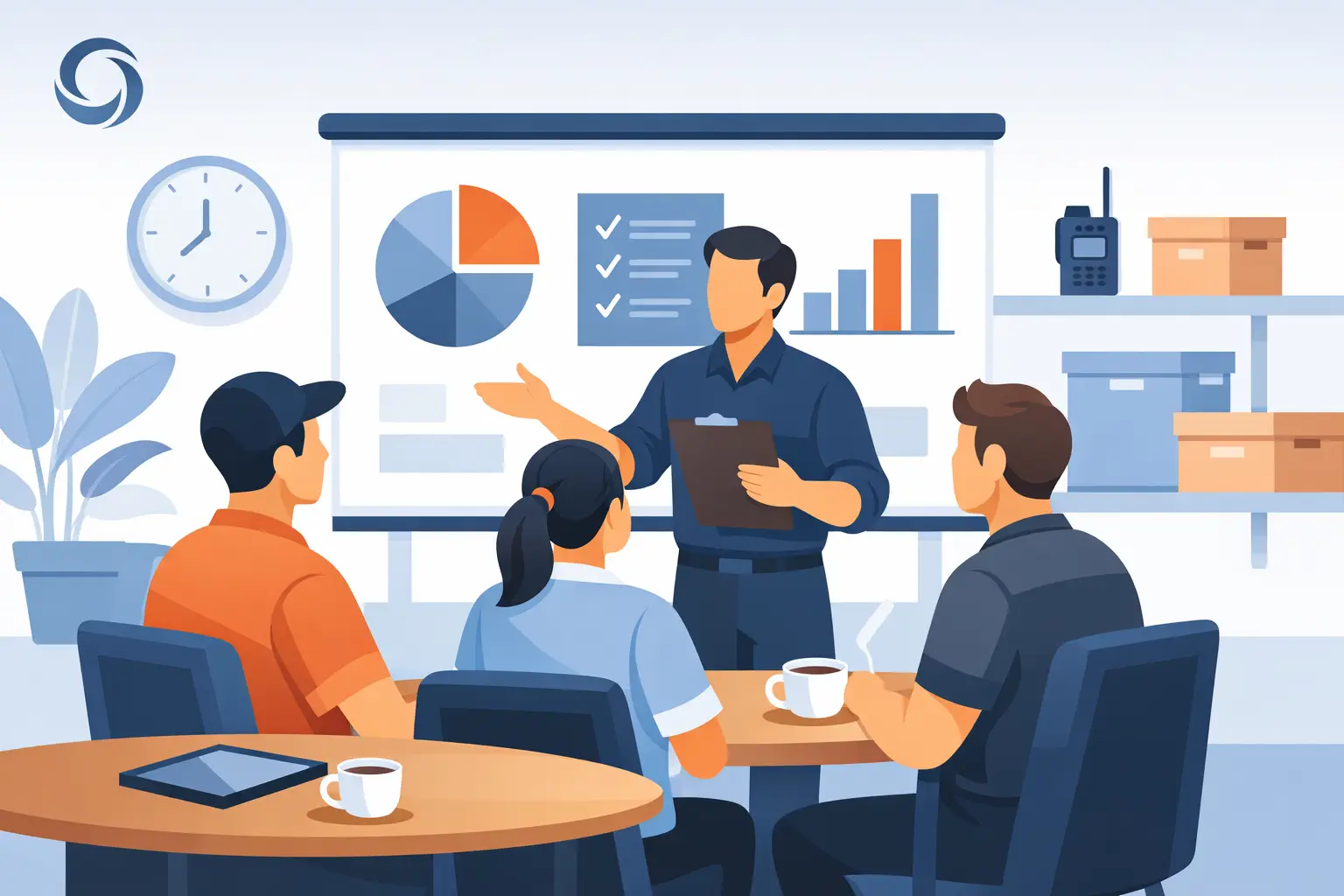
A useful pre-shift meeting leaves the team ready to act: they know today's service picture, the changes that affect their work, the risks to watch and who owns the response. The meeting should make the first hour of service clearer, rather than add another speech to an already busy setup.
For hotel F&B leaders, the same structure can support restaurants, bars, banquets and room service. The details should fit the outlet and shift. A breakfast briefing and a wedding-service briefing need different information, but both need a clear decision, a responsible role and a way to verify understanding.
Use pre-shift as a daily control point
A strong pre-shift is your daily control point. It is where you align service priorities, correct knowledge gaps, reinforce standards, and focus the team on what matters tonight, not in theory. In a luxury hotel restaurant, that may mean pacing around a VIP table and allergy-sensitive tasting menu. In banquets, it may mean timing, room flips, and communication between kitchen, stewarding, and service captains. In a high-volume bar, it may mean ID compliance, featured cocktails, and speed of service under a compressed labor model.
The trade-off is simple. If pre-shift is too long, staff tune out and managers lose the room before service begins. If it is too vague, teams walk onto the floor underprepared. The goal is not more information. The goal is operational clarity.
Keep four questions in view: What is happening on this shift? What could disrupt it? What recommendation would be useful to guests? Which standard needs attention today?
How to run pre-shift meetings with operational value
Start with the business priorities for that shift, not generic motivation. Your team does not need a speech. They need context. Covers, reservations, large parties, menu changes, VIPs, private dining constraints, staffing shortages, and known guest issues should be clear from the first two minutes.
This is where many meetings fail. Managers often lead with announcements that have no bearing on service execution. Payroll reminders and next week's schedule changes may matter, but they do not belong at the center of a pre-shift if the dining room is about to open in 15 minutes.
A useful structure is simple. Open with the shift picture. Move into product and service knowledge. Confirm risks and non-negotiables. Close with one commercial focus and one accountability point. That keeps the meeting disciplined without making it robotic.
Start with the shift picture
Set the operational scene quickly. How many covers are on the books? Where are the pressure points? Is the kitchen carrying any constraints? Are there timing issues between courses? Is there a buyout affecting flow from the bar? Are there weather-related terrace changes or room service surges expected from a group arrival?
Make the implications clear. If two large parties arrive together, identify who will manage seating and how the floor will communicate with the kitchen. Information becomes useful when it changes the plan.
Cover only the product knowledge that drives service tonight
Menu knowledge should never be a data dump. If you try to review every special, every wine note, and every modifier in one standing huddle, retention will be low. Focus on what the team must know to sell and serve accurately on this shift.
If there is a new dish, explain its approved description, current ingredient reference, permitted modifications and allergen escalation route. Demonstrate one relevant recommendation using verified product facts and prices. Avoid telling staff to push an item regardless of what the guest wants.
For bars, this may mean one featured spirit, one cocktail talking point, and one premium upgrade path. For banquets, it may mean event-specific sequence and guest expectation. For room service, it may mean delivery timing, tray standards, and repeat-call risk points.
Make risk visible
Every pre-shift should surface what can damage the guest experience or the business that night. This includes allergy exposure, 86 items, POS workarounds, staffing gaps, maintenance issues, service timing constraints, and compliance pressure.
Be direct. If an equipment problem changes what the kitchen can prepare, state the approved restriction and verification route clearly. If one section is staffed with newer servers, assign support before service starts. If table pacing needs attention, define the host-to-floor communication standard and assign support.
This is where operational leaders earn trust. Teams do not need polished language. They need management that sees risk early and gives them a plan.
Keep pre-shift short enough to hold attention
Aim for roughly five to ten minutes as an initial operating choice, then adjust to the outlet's needs. If the briefing routinely takes longer, separate training and administration from essential shift information. The more complex the operation, the more tempting it is to over-brief. But attention drops quickly, especially with multilingual teams, split-shift fatigue, and staff who are mentally moving toward setup and station readiness.
Short does not mean rushed. It means edited. Managers should know exactly what must be said, what can wait, and what should be communicated in writing or through a structured briefing tool.
The best operators separate daily execution from general administration. Pre-shift is for tonight's service. Broader coaching can happen later in lineup follow-ups, one-on-ones, or training blocks.
A practical briefing agenda
Use a short repeatable agenda so a relief supervisor can lead the same process without copying another manager's style. The timings below are illustrative; the outcome matters more than a stopwatch.
| Briefing point | What to cover | What the team should leave knowing | | --- | --- | --- | | Shift picture | Covers, groups, events and capacity constraints | Where pressure is likely to build | | Changes | Menu, stock, equipment and procedure updates | What differs from the last shift | | Guest and safety needs | Relevant requirements and escalation roles | What must be verified and by whom | | Service focus | One behaviour needing reinforcement | What good execution looks like | | Recommendation | One useful product or pairing | When it fits the guest and what it costs | | Confirmation | A scenario and action owners | The next step if the situation occurs |
For a dinner service, the shift picture might include two large parties arriving close together. The change might be an unavailable side with a culinary-approved alternative. The service focus could be confirming a course delay with the pass before updating a table. Ask the server to explain the action, not simply repeat the announcement.
For a banquet, use the current event order, service sequence, dietary escalation, transport arrangements and function changes. Confirm how a late request reaches culinary and who authorises the response. For room service, include delivery capacity and the handoff between order-taking, tray assembly and delivery. Do not rely on restaurant instructions that assume a colleague can speak directly to the guest at a table.
The briefing templates provide a useful starting point. Adapt the fields to the outlet while keeping the essential questions consistent.
Check understanding without making the meeting a quiz show
Ask a small number of realistic questions tied to that shift. “Where do you check the revised sauce information?” and “Who do you contact if this option is unavailable?” reveal more than “Does everyone understand?” A short demonstration can be better than a written question when the standard concerns a physical handoff or setup.
Give colleagues space to say that the answer is unclear. If the manager cannot verify a detail, record the open question and assign it to the appropriate owner. Do not fill a gap with a confident guess to keep the meeting moving. State any temporary restriction and make the final approved answer available before it is used.
For multilingual teams, use plain language and consistent terms. Ask for a practical explanation or demonstration rather than judging confidence in speaking. Pair a new starter with a designated support colleague for the shift, and make clear when the starter must involve a supervisor.
Keep a usable record and reach late arrivals
Record the date, outlet, shift, briefing leader, important changes and assigned actions. Capture which team or roles received the message, with a way to distinguish attendance from acknowledgement and demonstrated understanding. A clicked acknowledgement alone does not establish that the colleague can apply a critical procedure.
Have a catch-up process for staggered starts, agency staff and people moved between outlets. They need the current relevant briefing before taking an independent assignment. “It was covered at lineup” is insufficient for someone who was not there.
Keep guest information proportionate and available only to the roles that need it. A general team briefing should communicate the operational requirement without spreading unnecessary private detail. Refer staff to the appropriate controlled source for the full information.
When a change occurs mid-service, issue a clear update through the agreed channel, identify who must receive it, and verify receipt where the consequence warrants it. Update the written briefing so the next shift does not inherit the earlier version.
What a briefing tool should make easier
A digital tool is useful when it reduces preparation and follow-up effort. It should support outlet-specific templates, approved knowledge links, clear update history and an easy way to identify open actions. A shared document may be adequate for a small team if ownership and version control are reliable.
Ask a supplier to demonstrate how a manager prepares a briefing from current sources, adds a local constraint, corrects an item and reaches a late arrival. Check what happens when connectivity is poor and how the team retrieves the approved information during service. A tool that stores yesterday's notes without exposing today's change is not solving the central problem.
Set expectations for manager preparation. Review the previous handover, confirm changes with culinary or the relevant department, choose the few points that matter most and assign the response before gathering the team. The tool should support that judgement rather than automatically promote every message into the briefing.
Observe whether the briefing changed service
After the huddle, observe the behaviour discussed. Did the team use the agreed kitchen-to-floor communication? Could the new starter find the current answer? Was the open action resolved? Review these questions briefly at handover and use the findings to choose tomorrow's focus.
Track missed briefings, unresolved questions, update delays and recurring service errors with context. Do not claim a briefing caused a revenue change just because sales moved on the same night; covers, menu mix and staffing may also have changed. Combine records with direct observation and team feedback.
Coach the manager on a specific improvement: shorten the shift picture, make the action owner explicit or use a clearer scenario. A consistent structure leaves room for warm, natural leadership while ensuring the essential guidance reaches the floor.
SmartHospitality Operational Intelligence (OI) can connect briefings with approved knowledge, onboarding and manager reporting. It helps leaders keep shift guidance current and follow through on recurring questions while managers remain responsible for the briefing and its practical application.