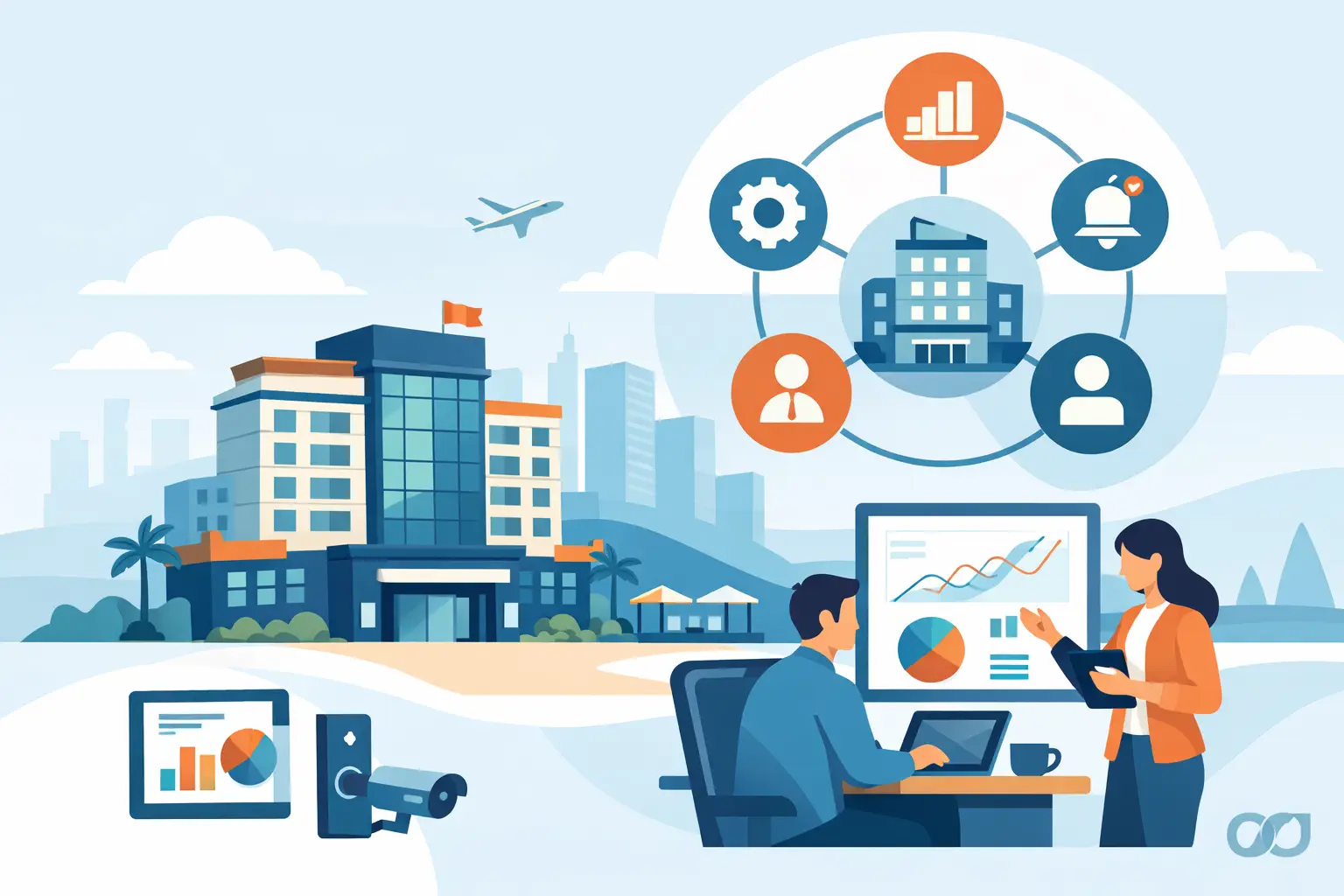
A hotel can hit occupancy targets and still leak profit every shift. It happens in the gap between what leadership expects and what teams actually know, say, and execute on the floor. That is why every hotel needs an operational intelligence layer - not as another dashboard, but as the system that connects training, service standards, compliance, and real-time manager visibility.
Most hotel operations are still held together by memory, PDFs, WhatsApp threads, pre-shift notes, and the hope that outlet managers are catching issues before guests do. That might hold for a small window. It does not scale across banquets, room service, lobby bars, breakfast service, fine dining, and seasonal staffing.
The cost shows up everywhere. A server misses a high-margin upsell because they do not know the pairing. A new hire answers an allergen question with too much confidence and not enough certainty. A banquet captain runs service with an outdated brief. A manager signs off a checklist without knowing whether the team actually understood the standard behind it. None of these failures look dramatic in isolation. Together, they erode margin, guest trust, and leadership control.
What an operational intelligence layer actually does
An operational intelligence layer sits between your standards and daily execution. It gives teams one live operating source for what they need to know, what they need to do, and what managers need to verify.
That matters because most hotel tech stacks were not built for service-floor decision-making. PMS, POS, labor, and procurement systems track transactions. They do not tell you whether your breakfast team can explain menu changes, whether your banquet staff absorbed the pre-function brief, or whether outlet managers are consistently preparing teams for service.
Operational intelligence fills that blind spot. It turns tribal knowledge into managed knowledge. It turns onboarding from a one-time event into an active readiness system. It turns checklists from box-ticking into accountability. And it gives leadership visibility into where execution risk is building before it becomes a guest complaint, a compliance issue, or a lost-cover night.
Why Every Hotel Needs an Operational Intelligence Layer now
Hotel labor pressure has changed the operating environment. Turnover remains high in many markets. Teams are often multilingual. Managers are stretched across outlets. Brand standards are rising at the same time guests are less forgiving of inconsistency.
In that environment, relying on strong individual managers is not enough. You need a repeatable operating system that keeps knowledge accurate, service standards current, and execution visible.
This is especially critical in food and beverage. F&B is one of the most operationally exposed parts of the hotel. It carries direct revenue opportunity, heavy guest interaction, allergen risk, service timing pressure, and constant menu and staffing changes. When knowledge gaps exist in F&B, the downside is immediate. Lost upsell revenue is immediate. Inconsistent service is immediate. Audit vulnerability is immediate.
A hotel without an operational intelligence layer usually discovers problems too late. Leadership sees results after the shift, after the complaint, or after the audit. By then, the recovery cost is higher than the prevention cost would have been.
The hidden business case: revenue, risk, and manager performance
The strongest case for operational intelligence is not theoretical. It is commercial.
First, it protects revenue. Teams that know the product, understand modifiers, remember pairings, and receive consistent pre-shift guidance sell better. Not occasionally - systematically. When knowledge is standardized, upselling stops being personality-driven and becomes operational.
Second, it reduces risk. Allergen exposure, inaccurate menu communication, and inconsistent compliance behavior are not training problems alone. They are visibility problems. If managers cannot see what staff know, what they missed, or where standards are slipping, risk compounds quietly.
Third, it improves manager effectiveness. Many hotel leaders are spending too much time answering repeat questions, chasing basic execution, and rebuilding consistency at the start of every shift. That is not leadership leverage. It is operational drag. An intelligence layer creates structure around daily briefings, checklist discipline, readiness scoring, and performance visibility so managers can coach, not just react.
What good looks like in practice
A useful operational intelligence layer is not generic LMS content with a hospitality label. It should reflect the pace and pressure of real service.
That means staff can quickly access accurate answers during live operations. New hires can be brought up faster without lowering standards. Pre-shift briefs are current, outlet-specific, and visible to leadership. Checklists tie to actual standards rather than passive completion. Audit readiness can be tracked before an inspection or brand visit. And senior operators can see where one outlet is drifting long before the P&L or guest feedback confirms it.
This is where a purpose-built hospitality platform changes the equation. SmartHospitality.AI was designed around the actual friction points operators deal with every day: repetitive staff questions, inconsistent onboarding, weak upselling, compliance exposure, and limited manager visibility across service teams.
The trade-off leaders should understand
An operational intelligence layer will not replace strong leadership, and it will not fix a culture problem on its own. If menu strategy is weak, staffing levels are unrealistic, or managers avoid accountability, software will not rescue the operation.
But that is not the point. The point is to give good operators a system that makes standards executable at scale. In a single-outlet property, you may feel you can manage without it for a while. In a hotel with multiple service environments, frequent menu changes, high guest expectations, and constant staffing movement, that logic breaks fast.
The hotels that outperform over time are not just better staffed or better branded. They are better informed at the point of execution. They know what their teams know, where the risk sits, and which managers are truly running disciplined operations. That is the real value of an operational intelligence layer - it gives leadership control over the part of the business where margin, trust, and standards are won or lost every day.