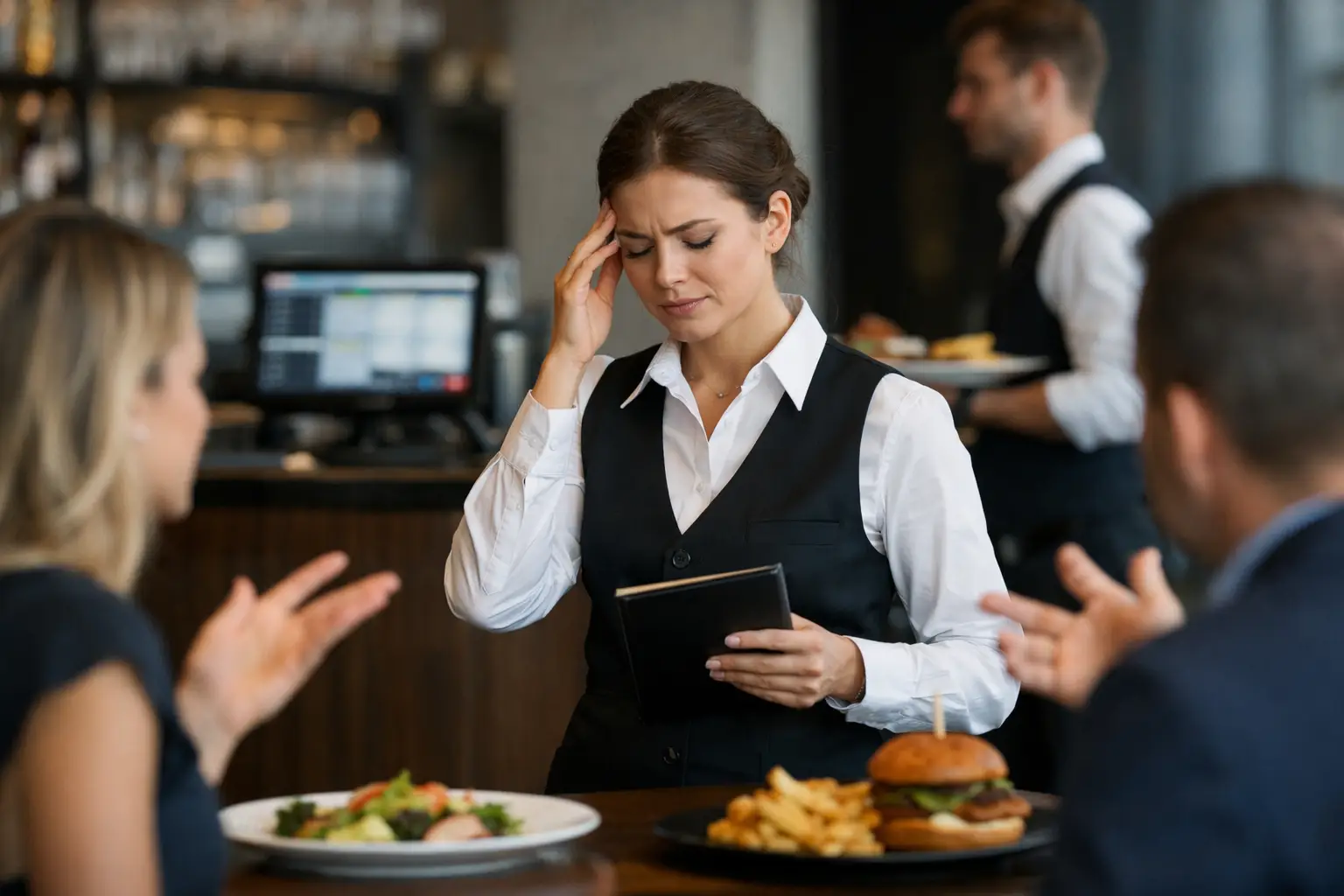
A guest orders a grilled chicken salad with no cheese, dressing on the side, and a nut allergy noted at the table. The server is confident, moving quickly, and managing three other conversations. The plate arrives with cheese, dressing already tossed through the greens, and no visible allergy communication. What looks like a simple missed modifier is actually a breakdown in restaurant operations.
When leaders ask, why do servers forget modifiers, the easy answer is carelessness. It is also usually the wrong one. Most servers do not ignore guest instructions. They work inside an operating environment that asks them to remember a growing number of details while navigating peak-period pressure, changing menus, fragmented systems, and inconsistent manager follow-through.
Modifiers are not minor details. They affect allergen safety, guest trust, food cost, speed of service, check averages, recovery comping, and online reviews. For a luxury restaurant, a resort outlet, or a high-volume hotel breakfast operation, repeated modifier errors become a visible sign that standards are not holding under pressure.
Why Do Servers Forget Modifiers? The Operational Causes
A modifier failure rarely starts when the server presses the wrong button. It usually starts earlier, when the team has not been given a reliable way to capture, confirm, communicate, and verify the guest's request.
Service pressure overwhelms working memory
During a busy service, a server may be holding table numbers, course timing, beverage requests, dietary restrictions, VIP notes, payment questions, and the next section's needs in their head at once. A request made verbally at the end of an order can disappear before it reaches the point-of-sale system, particularly when a guest changes their mind or several diners speak at the same time.
The issue is not whether a team member "knows better." It is whether the operation has reduced dependence on memory at the moment memory is least reliable. High-volume periods expose this gap first, but quiet shifts can conceal it until a major guest complaint or allergy incident makes the cost impossible to ignore.
Menu language and POS choices do not match
A guest says, "No dairy." The POS may offer separate options for no cheese, no butter, no cream sauce, and allergy alert. A server who knows the menu only at a surface level may select one instruction and assume it covers the rest. The kitchen receives a partial request, while the guest assumes the restaurant understood the full risk.
The same problem occurs with cooking temperatures, garnish removals, sauce substitutions, children’s meals, package inclusions, and beverage customizations. If the wording used at the table does not match the language in the ordering workflow, modifiers become interpretation work. Interpretation is where inconsistency enters.
Training explains the menu but not the decision points
Many onboarding programs teach item descriptions, ingredients, and service steps. Far fewer train the exact moment at which a server must pause and ask a clarifying question. "Gluten-free" can mean a preference, a medical requirement, or a request that needs cross-contact guidance. "No onions" may mean no raw onions, no cooked onions, or no onion-containing sauce.
Staff need practical judgment, not just a menu quiz. They must know which requests can be accommodated, which require a manager or chef confirmation, and how to set accurate expectations without making promises the kitchen cannot support. This is especially relevant in multilingual teams, where a phrase that sounds clear to the server may be unclear on the pass.
The handoff has no closed loop
A modifier is only complete when the right person has received it, understood it, and checked it against the finished plate. Too often, the server enters a note, the kitchen prints a ticket, and everyone assumes the process is finished.
For standard requests, that may be enough. For allergen alerts, extensive modifications, or high-value guest preferences, it is not. A verbal confirmation with the chef, an expo callout, or a final plate check can be the difference between a controlled service recovery and an avoidable guest safety event. The right level of verification depends on risk, but the operating rule must be unambiguous.
Managers cannot see where errors begin
When modifier mistakes are treated as isolated server errors, leaders miss the pattern. Is one outlet producing more remakes? Are errors concentrated at breakfast, during events, or on weekends? Is a particular menu item generating repeated questions? Are new hires making the same mistakes after their first two weeks?
Without manager visibility, corrective action becomes generic: remind the team to be careful. That reminder may improve attention for one shift, but it does not repair unclear POS configurations, weak menu knowledge, or inconsistent pre-shift communication.
The Business Cost Is Larger Than the Remake
The immediate cost of a missed modifier is a refired dish. The operational cost spreads further. The kitchen loses productive capacity at peak time. The server is pulled into apology and recovery. A manager may need to comp an item or table. Other guests wait longer because the pass is disrupted.
The commercial risk can be greater when the missed request concerns an upsell. A server may forget a guest's premium spirit substitution, side upgrade, or wine preference, then lose revenue while delivering an experience that feels inattentive. In hotels and resorts, where a guest may visit several outlets during one stay, one careless-seeming meal can influence their view of the entire property.
Allergen modifiers carry the highest stakes. They require clear escalation protocols, not informal confidence. If the operation cannot safely accommodate a request, the correct response is a precise explanation and an alternative, not a vague assurance. Audit readiness and guest protection depend on teams following the same standard every time.
Build a Modifier System That Works on Busy Shifts
The goal is not to turn servers into order-entry machines. It is to create a service rhythm that protects attention while preserving warmth and pace.
Standardize how requests are heard and repeated
Servers should repeat meaningful modifications back to the guest before leaving the table. This is not scripted hospitality. It is confirmation. A concise response such as, "To confirm: no cheese, dressing on the side, and I will have the kitchen review the nut allergy," gives the guest a chance to correct the order and signals professional care.
Define what counts as meaningful. An extra lemon may need only a POS modifier. A dietary restriction, allergen, extensive substitution, or preparation change may require a specified escalation path. Teams perform better when they do not have to invent the threshold mid-service.
Make modifier knowledge part of daily readiness
Pre-shift briefings should cover more than specials and reservations. Use them to address items that are generating frequent modifications, ingredients that changed, unavailable substitutions, allergy-sensitive preparations, and recurring guest questions. If a new menu item creates confusion, resolve it before the dining room opens.
This is where Hospitality Operational Intelligence becomes materially different from a static binder or an old training file. OI Knowledge can keep approved menu guidance, SOPs, and allergen procedures accessible in the context of service. OI Briefings can focus attention on the operational changes that matter that day, while OI Insights can show leaders where knowledge gaps are becoming repeat errors.
Design verification around risk, not habit
Not every order needs the same level of control. Build a tiered approach. Routine adjustments are entered and checked on the ticket. Complex requests are verbally confirmed with the kitchen team. Allergen-related orders follow a documented escalation and final verification process.
The trade-off is speed. Extra checks take seconds, and overusing them can slow service unnecessarily. But a well-designed system applies friction only where the risk justifies it. That is operational discipline, not bureaucracy.
Coach from evidence, not frustration
Review modifier errors as operational data. Track remakes by item, shift, outlet, request type, and team tenure. Then ask what failed: guest clarification, order entry, kitchen interpretation, or pass verification. A server who repeatedly misses modifiers may need targeted coaching, but a pattern across several servers points to a system issue.
Use short, specific coaching moments. Instead of saying, "Pay closer attention," show the team the exact guest phrasing that causes confusion and the approved response. This improves staff performance without creating a blame culture, which matters in operations already managing turnover and staffing pressure.
Make Every Modifier a Signal of Control
Guests do not judge the complexity behind their request. They judge whether the plate in front of them reflects what they asked for and whether the team treated their needs with care. For operators, each modifier is also a signal: it reveals how well menu knowledge, service standards, kitchen communication, and manager visibility are working together.
The strongest operations do not depend on heroic memory during a Saturday rush. They give teams clear language, current knowledge, sensible escalation paths, and feedback that turns small failures into better operating standards before the next guest is affected.