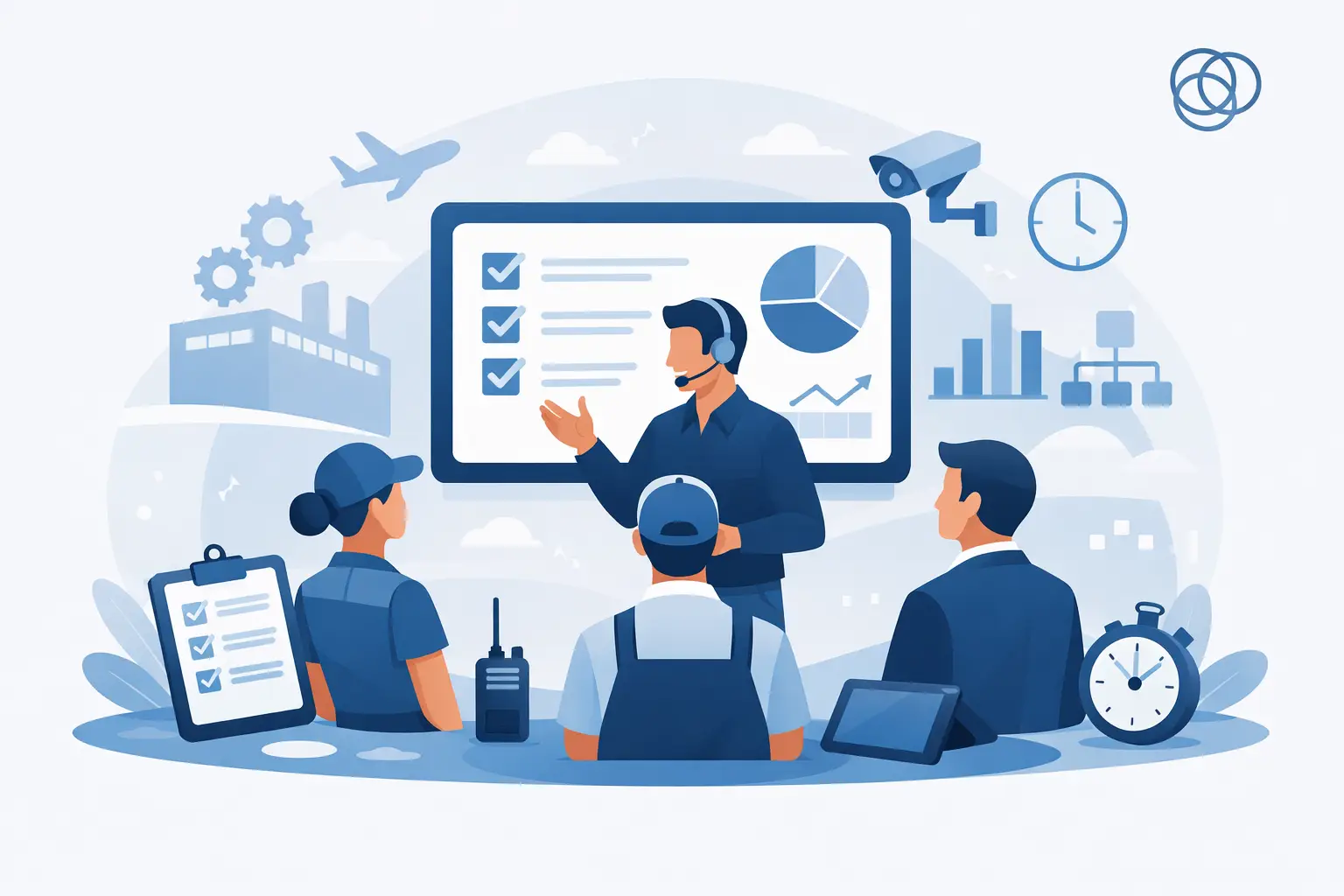
A five-minute lineup can either tighten the entire shift or waste the only window you have to get the team aligned. That is why a pre shift briefing tool matters so much in hospitality. If the briefing is rushed, inconsistent, or trapped in a manager's notebook, the cost shows up fast - missed upsells, allergy mistakes, uneven service language, and staff asking the same questions in the middle of peak.
For operators, pre-shift is not a ritual. It is a control point. It is where today's business realities get translated into floor behavior before the first guest walks in. When that moment is managed well, the team starts service with clarity. When it is managed poorly, managers spend the shift chasing avoidable problems.
What a pre shift briefing tool should actually fix
Most hospitality teams do not have a briefing problem because they lack good intentions. They have a briefing problem because the process is manual, personality-driven, and hard to repeat across outlets, managers, and shifts.
One manager runs a sharp lineup with menu priorities, VIP notes, allergy reminders, and sales focus. Another gives a quick pep talk and sends everyone out. A third skips it because the team is short and the printer is jammed. Across a week, that inconsistency becomes an operating pattern.
A proper pre shift briefing tool fixes the gap between what leadership wants communicated and what the floor actually hears, understands, and uses. It creates one operational source for the day's service priorities, product knowledge, standards reminders, and risk points. That matters even more in environments with high turnover, multilingual teams, banquets, room service, or multiple meal periods where the same standards need to travel across very different service conditions.
The goal is not to digitize a huddle for the sake of software. The goal is to make briefing measurable, repeatable, and useful under pressure.
The hidden cost of weak pre shift briefing
Hospitality leaders usually feel the pain of poor briefings before they measure it. Revenue comes in light even when covers are strong. Guest feedback mentions inconsistent service. Managers notice that staff confidence changes depending on who led lineup. New hires nod in briefing, then freeze when asked about ingredients, modifiers, or pairing suggestions.
The hidden cost sits in four places.
First is revenue leakage. If the team is not briefed on featured items, low-stock substitutions, premium pours, or promotion strategy, upselling becomes random. Servers sell what they remember, not what the business needs moved.
Second is compliance exposure. Allergy notes, 86 items, recipe changes, and service restrictions cannot live only in a verbal handoff. In a busy operation, memory is not a control system.
Third is labor inefficiency. Every repeated staff question during service means the pre-shift process failed upstream. Managers then become mobile help desks instead of floor leaders.
Fourth is leadership blindness. Without a structured pre shift briefing tool, there is rarely a reliable record of what was covered, who delivered it, whether teams understood it, or how briefing quality differs by manager and outlet.
This is where operators start to see briefing differently. It is not a soft culture moment. It is part of the property's daily nervous system.
What separates a real pre shift briefing tool from a digital note
A shared document or messaging thread may feel better than paper, but it does not solve the full problem. A real pre shift briefing tool should support execution, not just distribution.
That means the tool needs to pull together the information that matters before service - menu pushes, VIPs, events, out-of-stocks, allergen risks, service focus, training reminders, and outlet-specific notes. It should also make that information easy to deliver consistently, whether briefing is led by a seasoned GM or a newer supervisor covering a shift.
Just as important, the tool should create accountability. Did briefing happen? What topics were covered? Which recurring issues keep showing up? Are managers reinforcing the same service standards, or is every shift run off personal habit?
For multi-unit groups or hotels with several outlets, the trade-off becomes clear. A free-form process gives local flexibility, but it usually weakens control. A structured tool improves consistency, though it still needs room for outlet-level realities. Fine dining, banquets, bars, and room service should not receive identical briefings, but they should run from the same operating discipline.
How a pre shift briefing tool improves service performance
The best operators understand that service quality is usually won before service starts. A pre shift briefing tool raises performance because it shortens the distance between management intent and frontline action.
If the business needs to lift average check, briefing can focus the team on specific pairings, premium alternatives, and language that feels natural for the concept. If guest volume is expected to spike, the briefing can prepare pacing strategy, section coverage, and communication protocols. If the kitchen is carrying a menu change or allergen alert, the team hears it clearly and consistently before they are tested at the table.
This also changes the quality of manager coaching. Instead of repeating the same basics every day, leaders can track recurring knowledge gaps and coach against patterns. If one outlet keeps missing dessert attach or mishandling allergy confidence, that is no longer anecdotal. It becomes visible.
For many operations, that visibility is the real unlock in business terms, even if the technology itself stays in the background. A pre shift briefing tool is valuable because it turns briefing from a manager habit into operating intelligence.
Where operators get implementation wrong
The biggest mistake is treating the tool as a communication board rather than a management instrument. If managers simply paste notes into a system without structure, quality does not improve. The same is true if corporate overloads briefing with too many messages. A lineup packed with ten topics usually means the floor remembers two.
The second mistake is ignoring adoption reality. Briefing tools fail when they ask busy managers to do extra admin with no clear operational payoff. The process has to be faster than the current workaround and stronger under pressure. Otherwise, teams revert to verbal shorthand.
The third mistake is separating briefing from the rest of operations. Pre-shift works best when it connects with onboarding, staff knowledge support, checklists, and service standards. If a server hears a wine feature in lineup but has no easy way to confirm tasting notes later, the briefing loses value by mid-shift.
That is why purpose-built hospitality systems tend to outperform generic task apps or LMS tools here. In a real operation, knowledge, execution, and accountability are not separate problems.
How to evaluate a pre shift briefing tool for hospitality
Operators should assess a pre shift briefing tool with the same discipline they use for any system that touches revenue and risk.
Start with speed. Can a manager prepare and deliver a useful briefing quickly on a slammed day? If not, usage will drop.
Then look at relevance. Can the tool handle outlet-specific service realities without turning into chaos? A banquet captain, a fine dining manager, and a room service supervisor need different briefing details, but leadership still needs one standard of control.
Next is confirmation. Does the system show what was briefed and whether the team received it? In hospitality, undocumented communication is often indistinguishable from missed communication.
After that, focus on insight. Can the tool surface patterns in manager performance, recurring staff knowledge gaps, or frequent service risks? If it only stores notes, it is not giving leadership enough value.
Finally, check whether it fits the broader operating model. SmartHospitality.AI approaches briefing as one part of a connected operating intelligence system, which is exactly where many groups need to get to. Briefing is strongest when it supports training consistency, audit readiness, and daily service execution from the same operational core.
The real standard is not better communication
Better communication sounds nice, but hospitality leaders do not buy systems for nicer communication. They buy systems to reduce avoidable mistakes, protect revenue, and tighten execution.
A pre shift briefing tool earns its place when the floor runs cleaner because of it. Servers answer with more confidence. Managers spend less time firefighting. Allergy risk gets handled with more discipline. New hires ramp faster. Service language becomes more consistent across shifts. Revenue opportunities get pushed intentionally instead of accidentally.
That is the standard. Not whether the team liked lineup. Whether the operation performed better because the right information reached the right people before service started.
If your briefings still depend on memory, paper notes, or whichever manager happens to be on duty, you are leaving too much to chance. In hospitality, chance is expensive. The strongest operators treat pre-shift as a daily performance lever and give it the system it deserves.