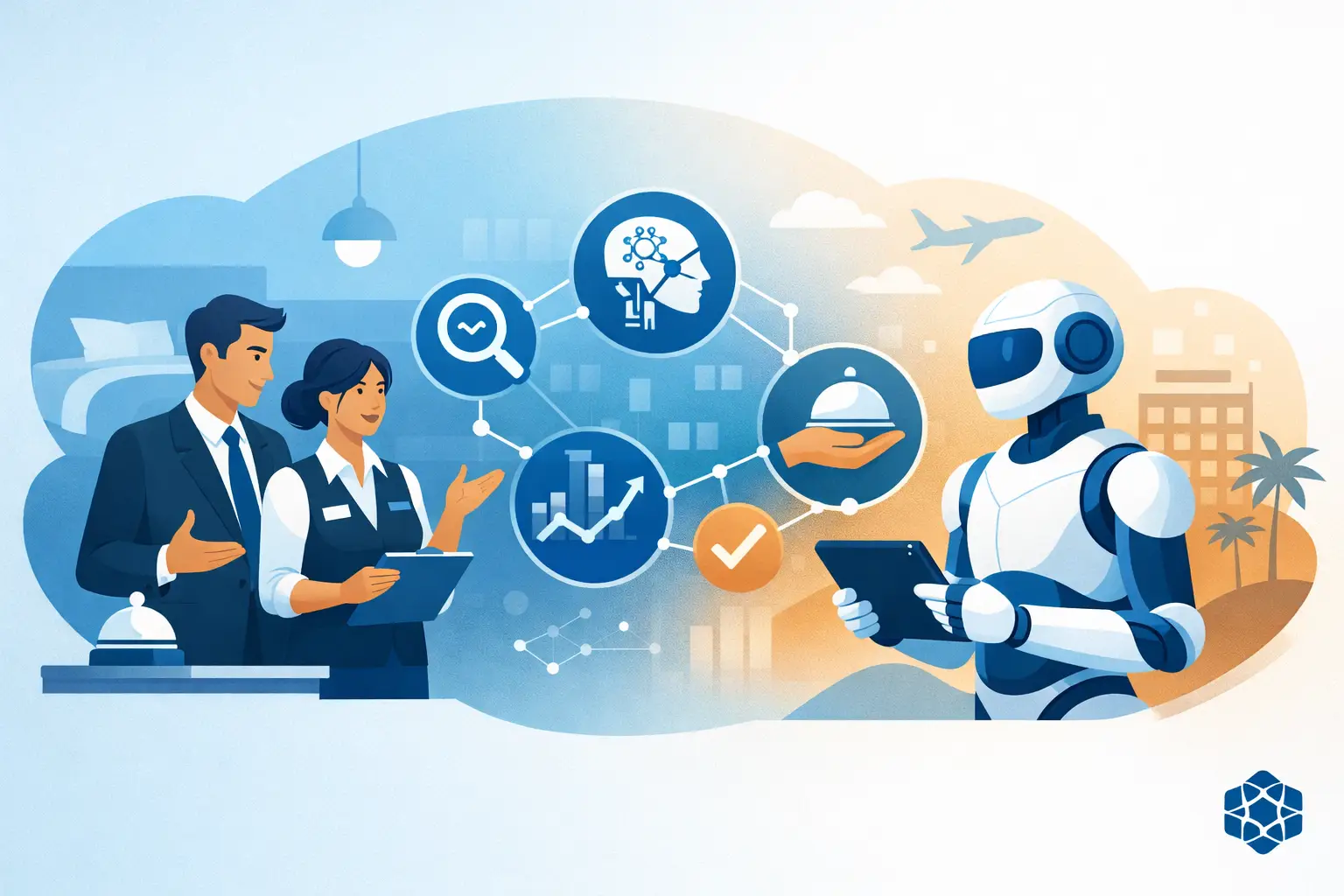
Most hospitality teams do not have a labor problem first. They have an information problem that shows up as labor waste, missed revenue, weak service consistency, and compliance risk. That is the real answer to the question, What OI could do? In a food and beverage operation, Operating Intelligence gives leaders a way to see where knowledge is breaking down, correct it fast, and turn daily execution into something measurable.
For owners, GMs, and F&B directors, that matters because the cost of not knowing is rarely labeled clearly on a P&L. It appears as servers who cannot speak confidently about modifiers, bartenders who miss premium pours, banquet teams who ask the same setup questions every event, and managers who spend entire shifts repeating answers instead of leading the floor. OI is not another dashboard for the sake of reporting. At its best, it becomes the daily nervous system of the operation.
What OI could do in real service conditions
In hospitality, knowledge gaps are operational gaps. If a guest asks about allergens and the answer varies by who is on shift, that is not a training issue in theory. It is an exposure point. If a new server takes four weeks to reach the same menu confidence as a tenured server, that delay has a revenue cost. If outlet managers cannot tell which teams are truly briefed, trained, and audit-ready, they are managing blind.
OI closes those gaps by connecting the information staff need with the workflows managers already run. Instead of relying on memory, paper checklists, chat threads, and verbal handoffs, leaders get a structured system for daily knowledge support, onboarding consistency, shift readiness, and accountability. That changes how an operation performs hour by hour, not just quarter by quarter.
From repetitive questions to usable operating intelligence
Most managers already know where time gets lost. It disappears into the same pre-service questions, the same menu clarifications, the same SOP reminders, and the same follow-up after tasks were supposedly completed. The problem is not effort. It is fragmentation.
This is where OI earns its keep. It centralizes frontline answers, standardizes training delivery, and captures whether staff actually understand what they need to execute. That distinction matters. Completion is not competence. A team may finish training modules and still fail at suggestive selling, sequence of service, or allergen handling under pressure.
When operating intelligence is built properly, managers can see patterns early. Which location has the weakest beverage knowledge? Which team needs reinforcement before an audit? Which managers are consistently running pre-shift properly, and which are relying on improvisation? Those are not soft signals. They directly affect covers, check average, guest trust, and labor efficiency.
What OI could do for revenue and risk
Hospitality operators tend to feel revenue leakage before they can trace it. A server does not recommend the right wine pairing. A host misses a private dining lead. A room service attendant cannot explain an add-on confidently. None of these failures look dramatic in isolation, but across outlets and shifts they create a real drag on performance.
OI improves revenue capture by making product knowledge accessible and current, especially in high-change environments with seasonal menus, specials, events, and rotating teams. Staff sell better when they know more, and they sell more consistently when that knowledge is reinforced every shift.
Risk reduction is just as important. Allergen errors, sanitation misses, and failed brand standards audits usually do not come from a lack of policies. They come from poor retention, inconsistent communication, and weak manager visibility. OI gives leaders a way to verify readiness instead of assuming it. That is a major operational difference.
Why generic tools usually fall short
Many operators try to solve these issues with some combination of LMS software, messaging apps, spreadsheets, and checklist tools. The result is predictable. Training lives in one system, daily execution in another, audits somewhere else, and managers still spend their shifts chasing compliance manually.
That stack creates data, but not operating intelligence. It does not tell you what staff are struggling to understand today, which outlet is drifting from standards, or whether a pre-shift briefing actually reached the team in a way that improves service.
Hospitality needs a tighter model. The floor moves too fast, turnover is too high, and guest expectations are too unforgiving for disconnected systems. A purpose-built platform like SmartHospitality.AI is designed around that reality - combining staff knowledge support, onboarding automation, checklists, pre-shift tools, audit readiness scoring, and manager visibility in one operational environment.
The leadership impact operators should care about
The strongest case for OI is not that it saves admin time, though it does. It is that it improves the quality of management itself. Leaders stop acting as human search engines and start acting like performance managers. They can coach where it matters, intervene earlier, and hold standards with evidence instead of instinct.
That shift is especially important in multi-outlet hotels, fine dining groups, banquets, and room service environments where complexity compounds quickly. When teams are multilingual, turnover is constant, and service standards are non-negotiable, operating intelligence gives structure to what otherwise becomes daily firefighting.
If you are asking what OI could do, the practical answer is simple. It can reduce knowledge-related revenue loss, tighten compliance execution, shorten the path to staff readiness, and give managers visibility they usually do not have until something goes wrong. In hospitality, that is not a nice-to-have. It is how disciplined operations protect margin and service standards at the same time.