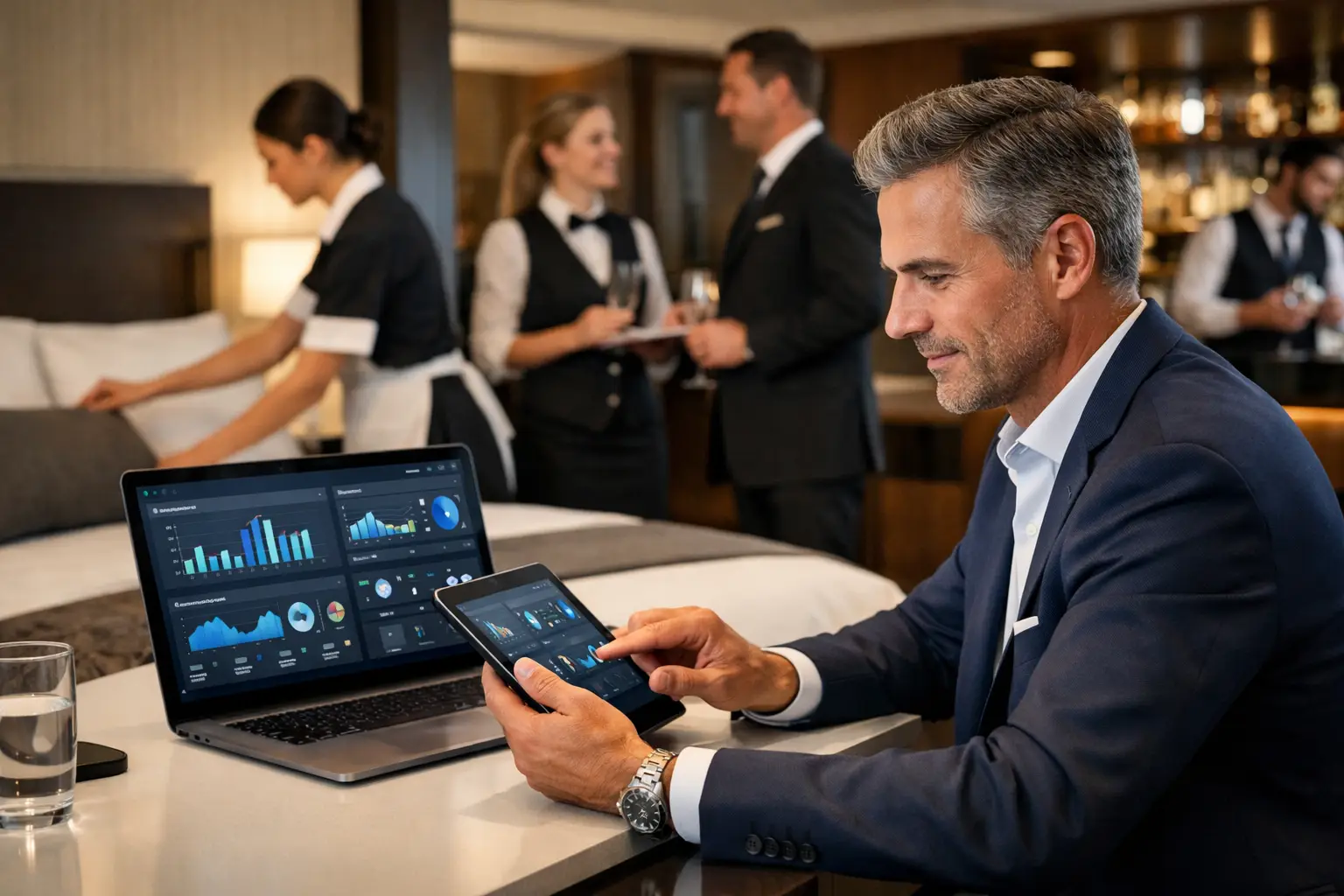
Saturday night, two servers are asking the same allergen question, a manager is rewriting the pre-shift briefing from memory, and a VIP table is waiting while the team checks whether the seasonal special can be modified. None of that looks dramatic on paper. On the floor, it is margin loss, service drag, and avoidable risk. That is the real context behind the question, what is smart operations.
In hospitality, smart operations means building a live operating system that helps teams know the right thing, do the right thing, and prove it happened. It is not just automation. It is not a dashboard for the sake of a dashboard. It is the practical coordination of knowledge, training, checklists, pre-shift communication, compliance, and manager visibility so service standards hold under pressure.
What is smart operations, really?
Most operators already have pieces of operations in place. There is usually a training binder, a shared drive, a messaging thread, a checklist app, maybe an LMS, and a lot of tribal knowledge carried by a few strong managers. The problem is not effort. The problem is fragmentation.
Smart operations closes that gap. It connects the moments that usually break apart during service. A new hire needs an answer. A bartender needs product guidance. A supervisor needs to verify side work. A director wants to know whether outlets are actually audit-ready. Smart operations ties those moments together into one performance system.
That matters because hospitality problems rarely start as big failures. They start as repeated small misses. A missed upsell here. A wrong modifier there. A delayed answer on allergens. A rushed onboarding handoff. A manager who assumes the team knows more than it does. Over a week, that affects revenue. Over a quarter, it affects guest trust, labor efficiency, and compliance exposure.
Why smart operations matters more in hospitality
Hospitality is not a static operating environment. Menus change. Promotions change. Banquet details change. Wine lists rotate. Teams are multilingual. Turnover is real. Brand standards are non-negotiable, but the conditions on the floor shift every day.
That is why generic business software often falls short. A standard project management tool does not understand pre-shift urgency. A basic LMS does not solve service-time questions. A digital checklist alone cannot tell you whether staff actually understand menu knowledge or allergen protocols. In hotels and restaurants, operations live in motion. Smart operations has to support that pace.
For F&B leaders, the value is direct. Better operational intelligence reduces the management burden of repeating answers, chasing task completion, patching inconsistent onboarding, and discovering gaps only after a guest complaint or failed audit. It creates a stronger daily nervous system for the business.
The core parts of smart operations
A real smart operations model usually starts with staff knowledge. If frontline teams cannot access accurate answers quickly, everything downstream suffers. Servers hesitate, bartenders improvise, runners interrupt managers, and guests feel the lag. In high-standard environments, speed without accuracy is risky, and accuracy without speed is unrealistic.
The second layer is training and onboarding. Smart operations does not treat onboarding as a one-time paperwork event. It turns training into a managed process with visibility. Leaders can see what was completed, what was understood, and where performance risk still exists. That matters in multi-outlet properties and restaurant groups where manager quality varies and consistency is hard to hold.
The third layer is execution control. Checklists, opening procedures, closing routines, and pre-shift briefings all sound basic, but basic is where operators win or lose. Smart operations turns these from informal habits into measurable disciplines. Not to create bureaucracy, but to reduce drift.
The fourth layer is audit readiness. Many teams think they are compliant until they are tested. Smart operations gives management a clearer view of whether standards are actually being maintained at the unit level. That is especially relevant in environments with allergen risk, brand inspections, health scrutiny, and elevated guest expectations.
Finally, smart operations gives leadership visibility into manager performance. Not just whether a task was marked complete, but whether the outlet is being run with discipline. Which locations are slipping. Which managers are coaching. Which teams keep generating repeat questions. Which service periods create the most operational friction.
What smart operations is not
It is not just AI, and it is not just automation.
A lot of technology gets labeled smart because it looks modern. But smart operations is not a chatbot bolted onto a broken process. It is not a reporting layer that tells you what went wrong after the shift is over. And it is not a stack of disconnected tools that creates more admin for managers.
If a system saves data but does not improve execution, it is not smart operations. If it creates another login without reducing repeat questions, training gaps, or compliance uncertainty, it is probably software, not operating intelligence.
That distinction matters because hospitality leaders do not need more digital clutter. They need fewer blind spots.
What smart operations looks like on the floor
Picture a hotel restaurant before breakfast service. A new server needs clarification on a menu item, a supervisor is confirming station readiness, and the manager is briefing the team on occupancy, VIPs, and a menu item with limited availability. In a weak system, that information lives in memory, scattered notes, or group messages. In a smart operation, the knowledge is structured, current, and accessible. The briefing is consistent. The checklist is completed with accountability. Leadership can see whether standards are truly being carried out.
Now shift to banquets. Function details change late, temporary staff may be involved, and service timing is unforgiving. Smart operations helps teams align faster because the operating information is centralized and the execution steps are visible. The gain is not theoretical. It shows up in fewer handoff errors, less manager firefighting, and stronger guest confidence.
In bars and high-volume outlets, the same principle applies. Product knowledge affects upsell performance. Incomplete training affects speed and consistency. Lack of visibility into recurring staff questions creates hidden revenue leakage. Smart operations surfaces those patterns before they become normalized.
The trade-offs and where it can go wrong
Smart operations is not magic. It still depends on leadership discipline.
If management loads a system with outdated SOPs, weak menu data, or generic training content, the result will be organized confusion. If managers treat the platform as a compliance exercise instead of a performance tool, adoption will stall. And if teams are measured on completion only, not understanding, the numbers can look healthy while service quality still slips.
There is also a balance to get right between structure and over-control. Great hospitality still requires judgment, warmth, and flexibility. Smart operations should reduce noise so teams can focus on guests. It should not turn service into a script-heavy routine that kills intuition.
The best implementations respect this. They standardize what must be standardized, such as allergen information, side work, onboarding steps, and briefing consistency, while leaving room for service style and managerial judgment.
How to tell if your business needs smart operations
If your managers spend too much time answering the same questions, you already have a smart operations problem. If onboarding quality depends on who happens to be training that week, you have one. If service teams miss upsell opportunities because product knowledge is uneven, that counts too.
Other signals are less obvious but just as costly. Audit readiness that cannot be verified. Outlet performance that feels manager-dependent rather than system-driven. Teams that look busy but still produce inconsistent guest outcomes. Leaders who have reports on labor and sales but little visibility into staff readiness and execution quality.
These are not minor frictions. They are signs that the business is carrying operational risk in daily service.
What smart operations changes for leadership
For owners, general managers, and F&B directors, the real benefit is not only efficiency. It is control with context. You can see where standards are holding, where knowledge is weak, and where managers need support before the guest feels the failure.
That changes the role of management. Instead of spending the shift reacting to repeated breakdowns, leaders can focus on coaching, performance, and commercial execution. Instead of hoping training landed, they can verify it. Instead of relying on instinct alone, they can operate with clearer intelligence.
That is where platforms built specifically for hospitality have an edge. A system such as SmartHospitality.AI is designed around the realities of service operations, where knowledge gaps, inconsistent briefings, weak onboarding, and low visibility show up immediately in revenue, compliance, and guest trust.
Smart operations is not about making hospitality more technical. It is about making execution more dependable in a business where details decide everything. The more complex your service environment becomes, the less you can afford to run on memory, improvisation, and crossed fingers.