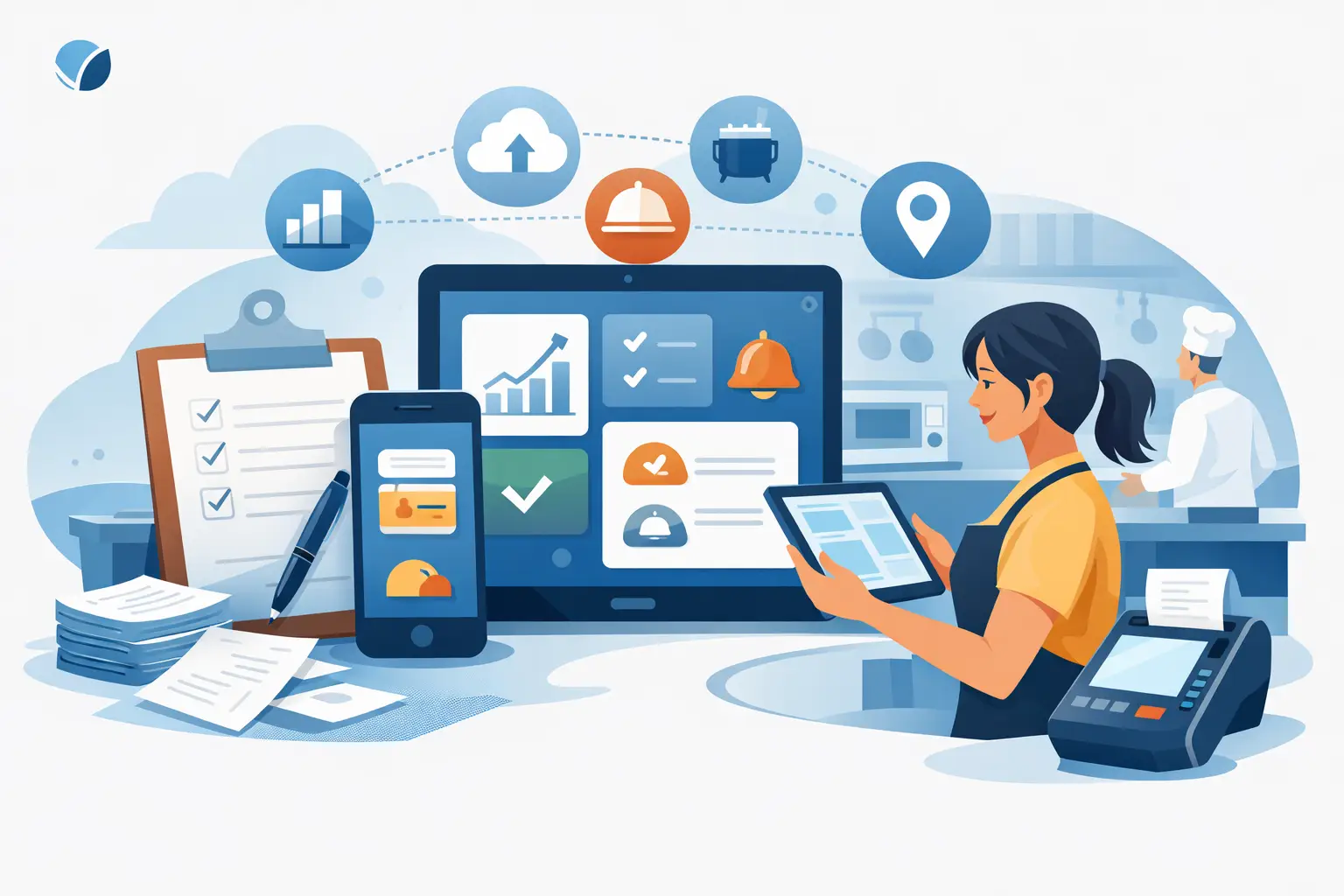
Paper logbooks feel familiar until they fail you at the exact moment you need proof, follow-through, or accountability. If you're asking, how do I track restaurant operations without paper logbooks?, the real issue is not where notes live. It is whether managers can see what happened, what was missed, and what needs action before service standards slip, audits fail, or guest trust takes a hit.
In a restaurant, hotel outlet, bar, or banquet operation, paper creates blind spots. A line check may be signed off but not actually completed. A temperature issue may be written down and never escalated. A pre-shift note may sit in a binder while the evening team walks into service underprepared. Paper records activity, but it rarely drives action.
What paper logbooks stop doing for you
Paper works as a historical record, but modern hospitality operations need a live operating system. Leaders need to know whether opening checks were done on time, whether allergen procedures were acknowledged, whether service notes reached the right team, and whether recurring issues are pointing to a training gap or a manager performance problem.
That matters because the cost of weak visibility is not administrative. It shows up in lost covers, missed upsells, inconsistent guest recovery, food safety exposure, and managers spending half their shift chasing answers. In multi-outlet environments, paper also destroys comparability. One manager documents thoroughly, another writes three words, and ownership gets a false sense of control.
How do I track restaurant operations without paper logbooks?
Start by replacing the logbook function with digital workflows tied to actual operating moments. Do not just scan forms into a tablet and call it modernization. That gives you digital paper, which keeps the same weaknesses.
A better approach is to map the core moments that paper currently covers: opening and closing checks, line checks, HACCP and temperature logs, cleaning verification, manager walk-throughs, shift notes, pre-shift briefings, maintenance issues, incident reporting, and audit tasks. Each one should become a structured workflow with timestamps, accountability, and escalation rules.
When a closing checklist is missed, the system should show it immediately. When a fridge logs out of range, the issue should trigger follow-up. When pre-shift communication changes a menu item, 86 list, VIP note, or allergen detail, that information should reach the floor team in a format they can actually use before service starts.
That is the difference between documentation and operating intelligence.
What a strong paperless setup looks like
The best paperless systems do three jobs at once. First, they standardize execution so every outlet, shift, and manager is working from the same playbook. Second, they create visibility so leadership can see completion rates, recurring failures, and risk areas without reading a stack of binders. Third, they connect tasks to knowledge so the team understands not just what to do, but why it matters.
For example, if a recurring bar setup failure keeps appearing on checklists, the answer may not be another reminder. It may be poor onboarding, unclear standards, or a rushed handoff between shifts. A good system makes that visible. A great one helps close the gap with embedded training, knowledge support, and manager follow-through.
This is where many operators make the wrong software choice. They buy a generic task app or a basic form tool. That may remove paper, but it does not solve hospitality's actual operating problem: teams need one place for checklists, shift communication, service standards, training support, and compliance visibility.
The trade-offs to plan for
Going paperless is not just a tech decision. It is a management discipline decision. If your workflows are vague, your digital system will scale vague behavior. If managers are inconsistent, the platform will simply expose that inconsistency faster.
There is also an adoption risk. Frontline teams will resist any tool that adds clicks without reducing confusion. That is why the best implementations focus on speed and relevance. A five-minute pre-shift briefing that sharpens menu knowledge, service focus, and VIP context will get used. A bloated digital form built for head office optics will not.
You also need to decide what truly requires verification. Not every task needs a photo, a comment, and a manager sign-off. Overbuilding the process slows teams down. Underbuilding it leaves compliance gaps. The right level depends on your concept, risk profile, and service complexity.
What operators should measure after replacing paper
If you remove logbooks but do not improve control, the project failed. The real measures are operational. Look at checklist completion by shift and outlet, unresolved issues by category, time to close corrective actions, pre-shift participation, audit readiness scores, and repeated misses linked to the same individuals or teams.
Then tie those signals to business outcomes. Are opening failures causing delayed readiness? Are knowledge gaps driving allergen questions back to managers? Are missed briefings showing up as poor upsell consistency or service errors? Once paper is gone, you should gain not just cleaner records, but better decisions.
For hospitality leaders under staffing pressure, that visibility becomes the daily nervous system of the operation. You are no longer waiting for yesterday's notes to explain today's problem.
A platform like SmartHospitality.AI fits this model because it treats paper replacement as part of a wider operating discipline: checklists, briefings, knowledge support, audit readiness, and manager visibility working together. That is usually what serious operators need. Not fewer clipboards, but fewer blind spots.
If you want to track restaurant operations without paper logbooks, do not start with the form. Start with the failure points that paper hides, then build a system that makes execution visible while service is still salvageable.