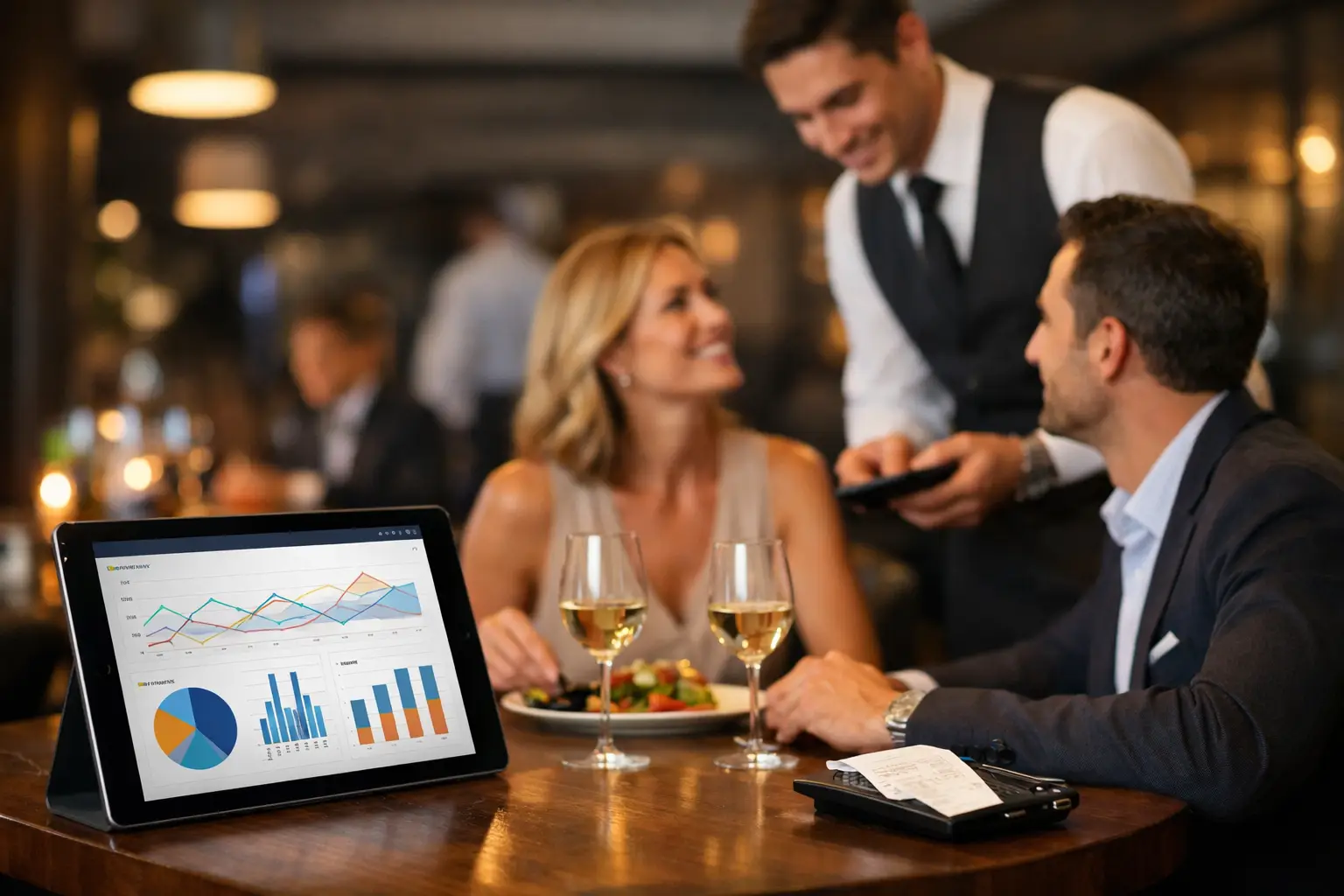
A server sells three premium wine pairings during a busy Friday dinner. Another serves the same number of covers, recommends nothing beyond the entrée, and receives the same generic pre-shift reminder to “upsell.” Without restaurant upsell performance tracking, both shifts may look acceptable on the sales report. The revenue opportunity, the knowledge gap, and the coaching need remain invisible.
For restaurant groups, hotels, resorts, and multi-outlet F&B operations, upselling is not a personality contest or a script forced on guests. It is the disciplined ability to make relevant recommendations at the right moment: a better cut, a pairing that improves the dish, a dessert that completes the occasion, or a premium nonalcoholic option for a guest who is not drinking. Tracking must show whether this is happening consistently, why it is happening, and where managers should intervene.
Why Total Sales Is Not an Upsell Metric
Total sales are an outcome, not a diagnosis. A restaurant can post strong revenue because of high footfall, pricing changes, a large group booking, or a favorable mix of guests. None of those factors proves that service teams are building check averages through informed, guest-centered recommendations.
The same problem applies to average check. It is useful, but it can hide material variation. A high average check may come from a small number of premium tables, while most servers are not recommending enhancements at all. Conversely, a lower average check in a lunch outlet may reflect the guest mission rather than weak performance.
Effective tracking separates commercial results from operational behavior. Leaders need to see the relationship between what was available to sell, what was recommended, what guests accepted, and whether the team had the knowledge and confidence to make the recommendation appropriately.
The Metrics That Reveal Actual Performance
Restaurant upsell performance tracking should begin with a small, clear scorecard. Excessive measurement creates reporting work without improving the floor. The right metrics provide managers with enough evidence to coach a person, refine a briefing, or correct a menu knowledge issue before it becomes a recurring revenue leak.
Attach Rate by Category
Attach rate measures how often a complementary item is sold alongside an eligible base item. Examples include wine with dinner, side dishes with steaks, upgraded mixers with spirits, dessert after mains, or add-ons with room service orders.
The question is not simply, “How many desserts did we sell?” It is, “What percentage of tables that were suitable for dessert purchased one?” This gives managers a more useful comparison between outlets, dayparts, and individual service teams.
A 12% dessert attach rate may be excellent in a fast business lunch format and disappointing in a destination dinner restaurant. Targets must reflect concept, service style, meal duration, guest profile, and menu design.
Upgrade Conversion Rate
Upgrade conversion shows the percentage of eligible orders that move from a standard choice to a higher-value choice. It can apply to premium spirits, larger wine pours, enhanced sides, chef’s selections, tasting menus, or preferred room categories with dining inclusions.
This metric matters because it measures recommendation quality at the point of decision. If an outlet sells many premium items but has low conversion, demand may be driven by the brand or menu rather than service performance. If conversion rises after focused product education, the operational cause is easier to identify.
Incremental Revenue per Cover
Incremental revenue per cover translates upselling into a figure operators can manage. It measures additional sales linked to defined upgrades or attachments, divided by covers. It is particularly valuable for comparing outlets with different volume levels.
Use this metric carefully. The goal is not to turn every guest interaction into a transaction. A luxury restaurant may prioritize a smaller number of precise, high-value recommendations over constant add-on prompts. Revenue per cover should always be interpreted alongside guest feedback, complaint patterns, and service standards.
Recommendation Activity and Knowledge Readiness
Point-of-sale data can reveal what sold, but not always whether it was recommended. Managers need a practical way to capture leading indicators: observed recommendation behavior, completion of product knowledge checks, confidence with allergen and pairing questions, and performance in pre-shift scenario discussions.
This is where operational discipline matters. If a server does not understand the difference between two wines, cannot explain a premium garnish, or hesitates when asked about allergens, the issue is not motivation alone. It is a knowledge management and readiness issue.
Build a Scorecard That Managers Will Use
A useful scorecard works at three levels: outlet, shift, and individual. At outlet level, leaders identify trends in attachment, conversion, category mix, and incremental revenue. At shift level, they see whether the evening briefing, stock availability, and service flow supported the commercial objective. At individual level, managers can coach with specificity rather than broad reminders.
For example, an outlet may have a weak sparkling wine attach rate on Saturday evenings. The response should not automatically be a new sales target. First examine whether sparkling wine was in stock, whether the team knew the by-the-glass options, whether hosts identified celebration tables, and whether servers had time to make recommendations before the first order.
That sequence distinguishes a people problem from a process problem. It also prevents managers from judging staff on results they could not reasonably influence.
A scorecard should compare actual performance against a relevant baseline, such as the prior four weeks, the same daypart, or a similar outlet. Avoid comparing a beach resort lunch venue with a city-center fine dining dinner room simply because both serve food and beverage. Context is part of operational intelligence.
Connect the Numbers to the Service Floor
The most common failure in upsell reporting is the gap between a weekly spreadsheet and the next service. Managers receive a number after the fact, discuss it briefly, and return to generic coaching. The report does not change what a server says at 7:15 p.m. when a table is deciding between a house red and a reserve selection.
The operating rhythm should be tighter. Use the previous shift’s results to shape the next briefing. If premium water attachment fell, the manager can review the opening recommendation, clarify which tables it suits, and confirm that the team knows the available formats. If dessert conversion dropped because the kitchen was slow, the action is operational coordination, not pressure on servers.
Briefings should focus on one or two commercial behaviors, supported by real product knowledge. A practical prompt is more effective than a slogan: “When a guest orders the grilled sea bass, explain the citrus beurre blanc and offer the Sauvignon Blanc pairing by the glass.” The team understands the product, the timing, and the guest benefit.
Managers should also recognize strong execution publicly. Not only the highest sales figure, but the employee who used the right recommendation, handled a dietary concern correctly, or improved after coaching. This protects service culture from becoming purely target-driven.
Track Quality, Not Just Quantity
Aggressive upselling can damage trust quickly, especially in luxury hospitality. Guests recognize when a recommendation is useful and when it is rehearsed pressure. The commercial standard should be relevant recommendation, not maximum spend at any cost.
Add quality checks to the performance conversation. Review guest comments that mention service, monitor voids and returns related to unsuitable recommendations, and use manager observations to assess whether staff listen before recommending. A server who suggests a premium wine to a guest who has said they are driving has not demonstrated strong upselling. They have missed the guest signal.
Allergen safety is equally non-negotiable. No commercial initiative should encourage staff to recommend items they cannot accurately explain. Product knowledge must include ingredients, allergens, availability, and substitution guidance. Revenue optimization without operational standards creates exposure that no increase in check average can justify.
Turn Reporting Into Operational Intelligence
Traditional reporting tells leaders what happened. Hospitality Operational Intelligence helps them understand what to do next. It brings menu knowledge, service standards, pre-shift briefings, coaching observations, and performance reporting into one operational view.
For a multi-outlet operator, that means identifying whether weak beverage conversion is concentrated in one venue, one daypart, or among recently onboarded employees. It means seeing whether training completion improved but recommendation behavior did not, signaling that the learning content or manager reinforcement needs adjustment. It means producing OI Recommendations that are specific enough to act on during the next shift.
SmartHospitality.AI is designed around this operating reality: the daily nervous system of hospitality operations is not a static report. It is the connection between what teams know, what they do on the floor, and what leaders can see in time to improve performance.
A Practical 30-Day Starting Point
Start with one outlet and two or three revenue opportunities that fit its concept. A dinner restaurant might track wine pairings, premium water, and dessert attachment. A resort pool outlet may focus on premium cocktail upgrades, shareable items, and zero-proof options. Define eligible transactions and establish a baseline before setting ambitious targets.
During the first two weeks, validate the data and observe service behavior. Ask managers to note what prevents recommendations: uncertain knowledge, poor menu visibility, stock gaps, timing, or reluctance to interrupt guests. In weeks three and four, use short, focused briefings and individual coaching to address the clearest barriers.
Do not expect every metric to rise at once. A temporary drop in conversion may occur when teams begin prioritizing more appropriate recommendations over indiscriminate offers. That can be a sign of healthier service judgment. The objective is repeatable, guest-aligned revenue growth, not a one-week spike that staff and guests resent.
When managers can see the link between knowledge, behavior, and results, upselling stops being an awkward instruction handed down before service. It becomes a measurable part of operational excellence: better-informed teams, more relevant guest conversations, and revenue earned through service that feels genuinely considered.