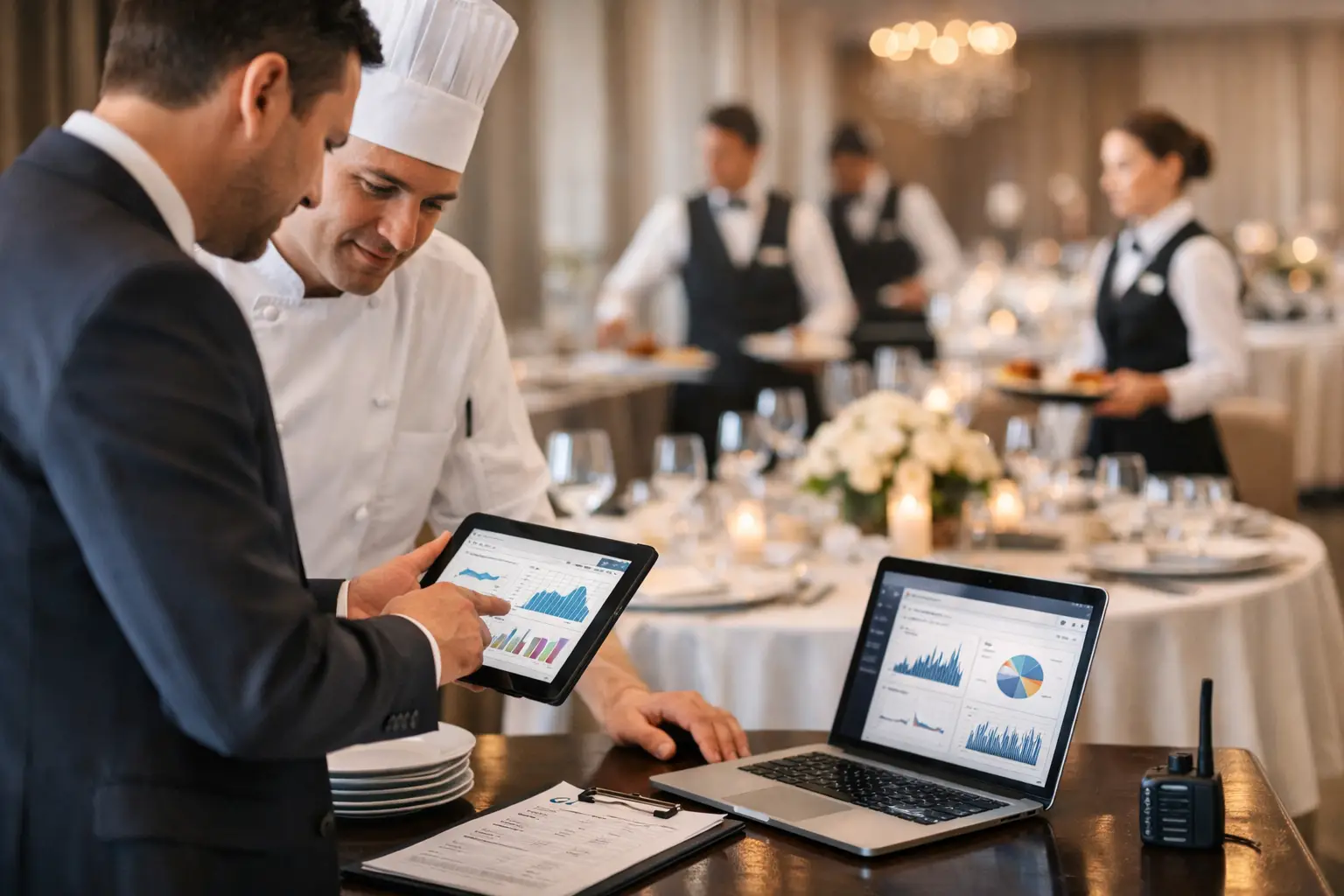
A 300-guest gala can feel flawless in one ballroom and disjointed in the next, even under the same brand, same menu, and same labor budget. That gap is exactly why so many operators ask how to improve banquet service consistency. In banquets, inconsistency is rarely a talent problem. It is usually a systems problem that shows up under pressure - during a fast room flip, a late VIP seating change, a missed allergy note, or a service team built from mixed experience levels.
For hotel operators, F&B directors, and banquet leaders, consistency is not just a service ambition. It protects margin, audit readiness, guest confidence, and brand reputation. A plated dinner that fires three minutes late across 40 tables can create kitchen congestion, cold plates, frustrated clients, and comp risk. A pre-function team that briefs one group well but leaves another guessing creates uneven execution before the first tray leaves the pantry.
Why banquet inconsistency happens
Banquet service is operationally demanding because it compresses complexity into short windows. Staffing changes daily. Event orders evolve. Temporary or cross-trained staff fill gaps. Managers often rely on verbal handovers, printed packets, and scattered notes. That model can work for small volumes, but it breaks down quickly at scale.
The core issue is that many banquet teams operate with fragmented knowledge. One captain knows the VIP sequence. One manager understands the room reset standard. One senior server remembers the allergy protocol from last quarter's training. When knowledge lives in people instead of the operation, consistency becomes fragile.
This is also why traditional fixes often underperform. More checklists can create paperwork without clarity. More training sessions can add content without retention. More manager oversight can help in the moment but is hard to scale across multiple ballrooms, outlets, or properties. If you want to improve banquet service consistency, the real objective is to create repeatable execution under variable conditions.
How to improve banquet service consistency at the operational level
The fastest improvements usually come from standardizing the moments that create the most downstream disruption. Not every banquet variable can be controlled, but the critical ones can be structured.
Start with service-critical standards, not broad SOPs
Many banquet SOPs are too long to use during live operations. Teams do not need a 20-page document at lineup. They need absolute clarity on what cannot vary.
That typically includes room setup standards, table numbering logic, service sequence, tray carrying and clearance rules, allergy escalation steps, wine and beverage service order, VIP handling, and communication protocols between the floor and kitchen. If those standards are not defined in operational language, teams improvise. Improvisation is where inconsistency begins.
The trade-off is that over-standardization can make service feel mechanical, especially in luxury environments. The answer is not fewer standards. It is tighter standards on non-negotiables, paired with judgment on guest interaction.
Build one source of operational truth
Banquet teams lose consistency when staff pull answers from different places - event orders, WhatsApp messages, printed notes, memory, and last-minute verbal briefings. That creates version-control problems in the hours when precision matters most.
Operators need one current source of truth for event details, service standards, timing changes, dietary notes, and role expectations. This is where Hospitality Operational Intelligence becomes materially different from standalone documents or static training libraries. OI connects live operational knowledge with manager visibility, pre-shift briefings, and execution support so teams are not working from yesterday's assumptions.
In practical terms, that means captains, supervisors, and managers can align faster around the same answers. Fewer repeated questions reach the office. Fewer service decisions rely on guesswork. And fewer preventable mistakes reach the guest.
Pre-shift briefings are where consistency is won or lost
A weak pre-shift briefing creates avoidable variance before service starts. Banquet teams need concise, role-specific briefings that answer five things clearly: what is different tonight, what matters most, where the risks are, who owns what, and what success looks like.
That sounds simple, but many pre-shifts are either too generic or too long. Generic briefings miss the operational pressure points. Long briefings dilute retention, especially with multilingual teams or staff coming in from other outlets.
What a strong banquet briefing should cover
A good banquet briefing should confirm final guest count, service style, event timeline, special seating, VIPs, allergies, bar expectations, table assignments, communication chain, and key brand moments. It should also address likely failure points, such as synchronized plate drops, coffee timing, ballroom turns, or simultaneous dessert and AV transitions.
The key is specificity. Saying "watch timing" is not useful. Saying "main course fires at 7:42, section leaders confirm readiness at 7:38, and no plate leaves the pass without table map alignment" is useful.
This is another area where OI Briefings can improve execution. Instead of relying on whichever manager happens to be strongest at communication that day, operators can create a more disciplined briefing structure that improves retention and reduces drift across teams.
Train for repetition under pressure, not just orientation
One of the biggest banquet mistakes is treating consistency as an onboarding issue. Orientation matters, but banquet reliability is built through reinforcement. Staff forget details. Standards drift. New managers interpret rules differently. Busy teams develop shortcuts.
If your banquet operation uses agency staff, cross-utilized restaurant servers, or seasonal teams, reinforcement becomes even more important. The question is not whether staff were shown the standard once. The question is whether they can execute it correctly during a compressed service window.
Use micro-training around high-risk moments
The most effective banquet training usually focuses on short, repeatable topics tied to live service. Think tray setup for synchronized service, allergy plate identification, wine opening sequence at VIP tables, silent clearance standards, or handling a delayed keynote without breaking kitchen flow.
This approach works because it matches how banquet teams actually operate. They do not need abstract theory before a 500-cover awards dinner. They need clear refreshers on the moments that cause guest-visible failures, revenue leakage, or compliance exposure.
Manager visibility matters more than manager heroics
In many banquet operations, consistency depends too heavily on a few experienced leaders who catch problems in real time. That keeps service afloat, but it does not create a scalable operating model. If one strong banquet manager is carrying timing, setup quality, client communication, and staff questions alone, the system is underbuilt.
The better model is stronger manager visibility before service issues become guest issues. Leaders should be able to see where standards are slipping, where knowledge gaps are repeating, and which events generate the most corrections, delays, or client complaints.
This is where operational reporting becomes commercially important. If one outlet has stronger upselling conversion at banquets, lower setup errors, or better dietary compliance, leaders need to know why. If one team regularly misses coffee timing or floor diagrams, that should not stay anecdotal. It should become actionable.
Staffing consistency is not the same as staffing stability
Many operators assume banquet inconsistency is mainly caused by turnover. Turnover does matter, but even stable teams can deliver inconsistent service if role clarity is weak. On the other hand, some high-turnover operations perform well because execution standards are tightly managed.
So the goal is not simply to keep the same people. It is to make sure any qualified person stepping into a role can perform to standard quickly. That requires clearer role definitions for captains, servers, runners, bartenders, and setup teams, along with easier access to current event knowledge.
For multinational and multilingual teams, this becomes even more important. If instructions are overly complex, heavily verbal, or inconsistently translated by supervisors, service execution will vary by shift. Operational clarity has to survive language differences, skill differences, and time pressure.
Measure consistency with operational signals
If you want to improve banquet service consistency, you need to measure it beyond guest comments. By the time a client complains, the operational failure has already happened.
Track signals such as briefing completion quality, last-minute event clarifications, setup deviations, service timing variance, allergy escalations, repeated manager questions, upsell capture, and post-event corrections. None of these metrics tells the whole story alone, but together they reveal where the operation is unstable.
The important nuance is that metrics should drive coaching, not bureaucracy. If data collection becomes another admin burden, teams stop trusting it. The best operational metrics help leaders intervene faster and coach more precisely.
The long-term fix is an operating system for knowledge
Banquet consistency improves when standards, training, briefings, and live execution stop operating as separate silos. That is why more hospitality groups are moving toward Operational Intelligence as the connective layer across service knowledge, onboarding, audit readiness, and daily decision support.
For banquet operations, that shift matters because service quality is shaped in the hours before the doors open. When teams have current knowledge, managers have visibility, and standards are reinforced in real operating language, consistency becomes far more achievable - even across large teams, multiple event formats, and demanding client expectations.
SmartHospitality.AI was built around that operational reality. Not to replace leadership judgment, but to strengthen it with the structure, visibility, and OI knowledge banquet teams need to execute with less friction.
If banquet service feels inconsistent, the answer is usually not another speech about standards. It is a better operating discipline that helps teams perform the same critical moments correctly, every time, when the room is full and the margin is on the line.