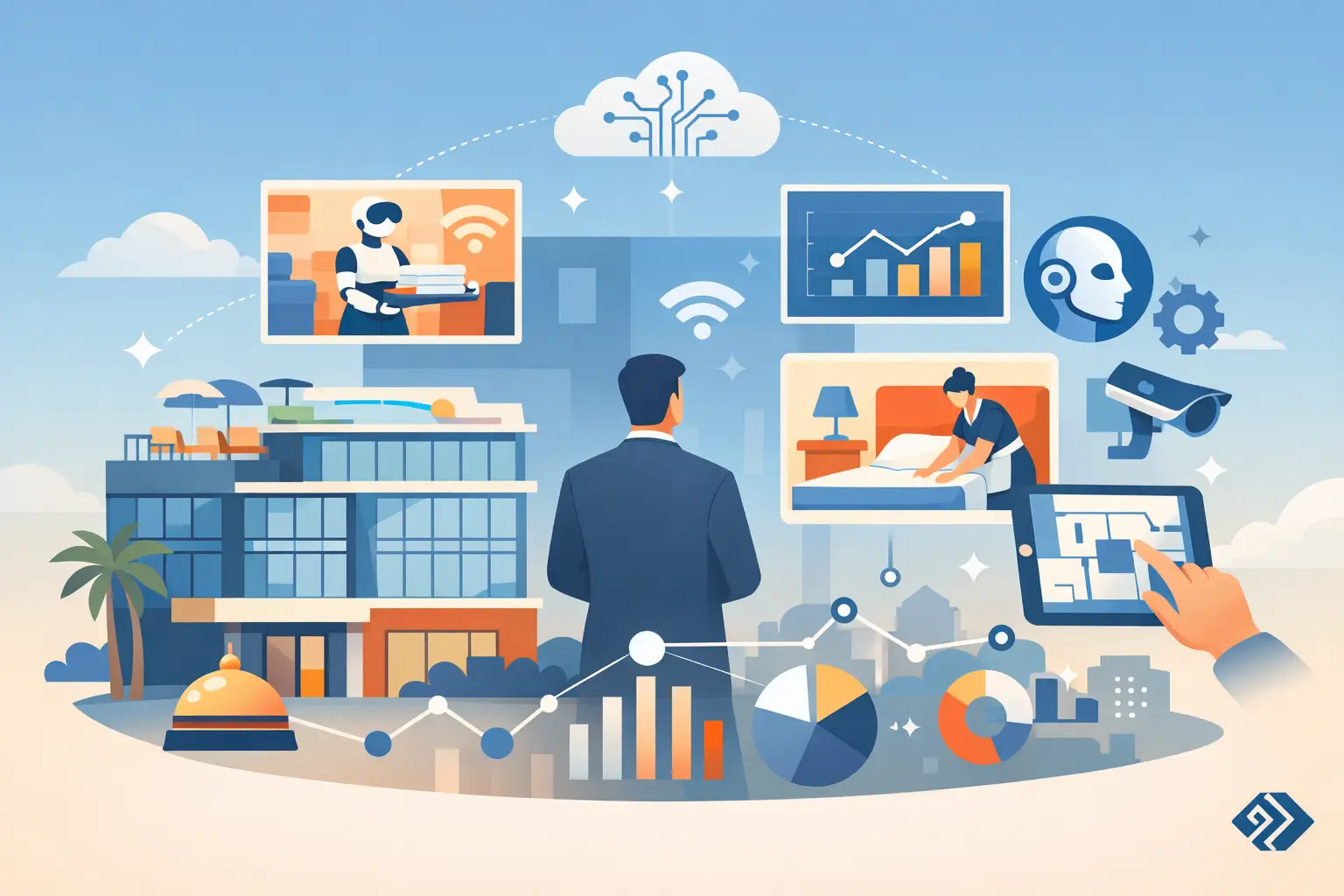
Ask any hotel operator where margin disappears, and the answers are usually familiar: inconsistent training, missed upsells, avoidable comps, allergen risk, weak handoffs, and managers buried in follow-up. The Future of Hotel Operations is Operational Intelligence because the real problem is not effort. It is visibility. Most properties still run critical service functions without a live picture of what teams know, what they missed, and where execution is drifting.
For years, hotel operations relied on experience, SOP binders, pre-shift notes, and manager instinct. Those still matter. But they are no longer enough for high-turnover, multi-outlet, multilingual environments where one missed detail can affect guest trust, brand standards, and profit in the same shift.
Why hotel operations need operational intelligence now
Operational intelligence is not another dashboard layered on top of an already noisy tech stack. In a hotel setting, it means turning frontline activity into usable management visibility. What are staff repeatedly asking? Which menu items are not being explained correctly? Where are managers skipping checks? Which outlets are prepared for audit pressure, and which only appear prepared on paper?
That matters because hotel F&B is no longer a side department. For many properties, it is a brand-defining revenue engine. A weak dining experience does not stay contained to the restaurant. It affects reviews, repeat stay intent, banquet reputation, and guest confidence across the property.
The cost of operating without intelligence is easy to underestimate because it shows up in fragments. A server cannot answer a question about ingredients, so a guest orders less. A new hire shadows the wrong person and picks up bad habits. A pre-shift briefing is rushed, so the team misses a VIP note or a high-margin special. A manager signs off on a checklist without knowing whether the standard was truly understood. None of these failures look catastrophic alone. Together, they create constant revenue leakage and compliance exposure.
The future of hotel operations is operational intelligence, not more software
Operators do not need more systems that create extra admin. They need a daily nervous system for service execution. That is the difference.
Traditional training tools tell you what content exists. Checklist tools tell you whether someone tapped complete. Generic LMS platforms tell you who finished a module. None of that tells a hotel GM or F&B director where knowledge gaps are actively hurting performance today.
Operational intelligence closes that gap. It connects training, service support, briefing discipline, checklist execution, and manager oversight into one operating layer. Instead of reacting after a guest complaint or failed audit, leaders can spot patterns early: the outlet where upselling is weak, the shift where standards slip, the manager whose team requires repeated intervention, or the recurring question that signals a training failure.
This is where many hospitality tech conversations go off track. They focus on digitization as the goal. It is not. Better execution is the goal. If a system does not reduce firefighting, strengthen accountability, and improve commercial performance, it is just another login.
What operational intelligence looks like on the floor
In practical terms, it means a server can get the right answer before misinformation reaches the table. It means onboarding is not dependent on who happened to train the new hire that day. It means pre-shift briefings become consistent tools for revenue capture, not rushed rituals. It means outlet leaders can see whether standards are holding across banquets, room service, bars, and signature restaurants without physically chasing every task.
It also means audit readiness becomes measurable. That is critical in hotels where compliance pressure is tied to brand inspection, food safety, allergen handling, and ownership scrutiny. Readiness should not be a feeling. It should be visible in daily execution patterns.
The strongest operators already understand this instinctively. They know that service quality is built in moments before the guest ever notices it: the lineup, the check, the answer, the handoff, the follow-through. Operational intelligence gives leadership a way to manage those moments at scale.
Where the commercial upside shows up first
Most hotels see the first gains in three places: labor efficiency, revenue capture, and risk reduction.
Labor efficiency improves when managers stop answering the same questions repeatedly and stop rebuilding training from scratch for every hire. Revenue capture improves when teams know the menu, know the modifiers, know the pairings, and can sell with confidence. Risk drops when allergen information, SOP adherence, and shift-critical tasks are supported by live operational structure instead of memory.
There is a leadership benefit too. Strong GMs and F&B directors should not have to rely on anecdotes to understand outlet performance. They need manager visibility that goes beyond personality and presence. Who briefs well? Who follows through? Whose team is service-ready? Who is creating hidden operational debt?
That is why purpose-built hospitality systems matter. A platform designed around the reality of pre-shifts, outlet checks, service questions, training inconsistency, and audit pressure will outperform generic workforce tools every time. SmartHospitality.AI is built around that exact operational reality.
Hotel operations are getting more complex, not less. Guest expectations are higher, staffing remains unstable, and service errors travel faster than ever through reviews and brand oversight. The properties that win will not be the ones with the most software. They will be the ones with the clearest operational intelligence, the fastest feedback loops, and the strongest control over what happens on the floor every day.