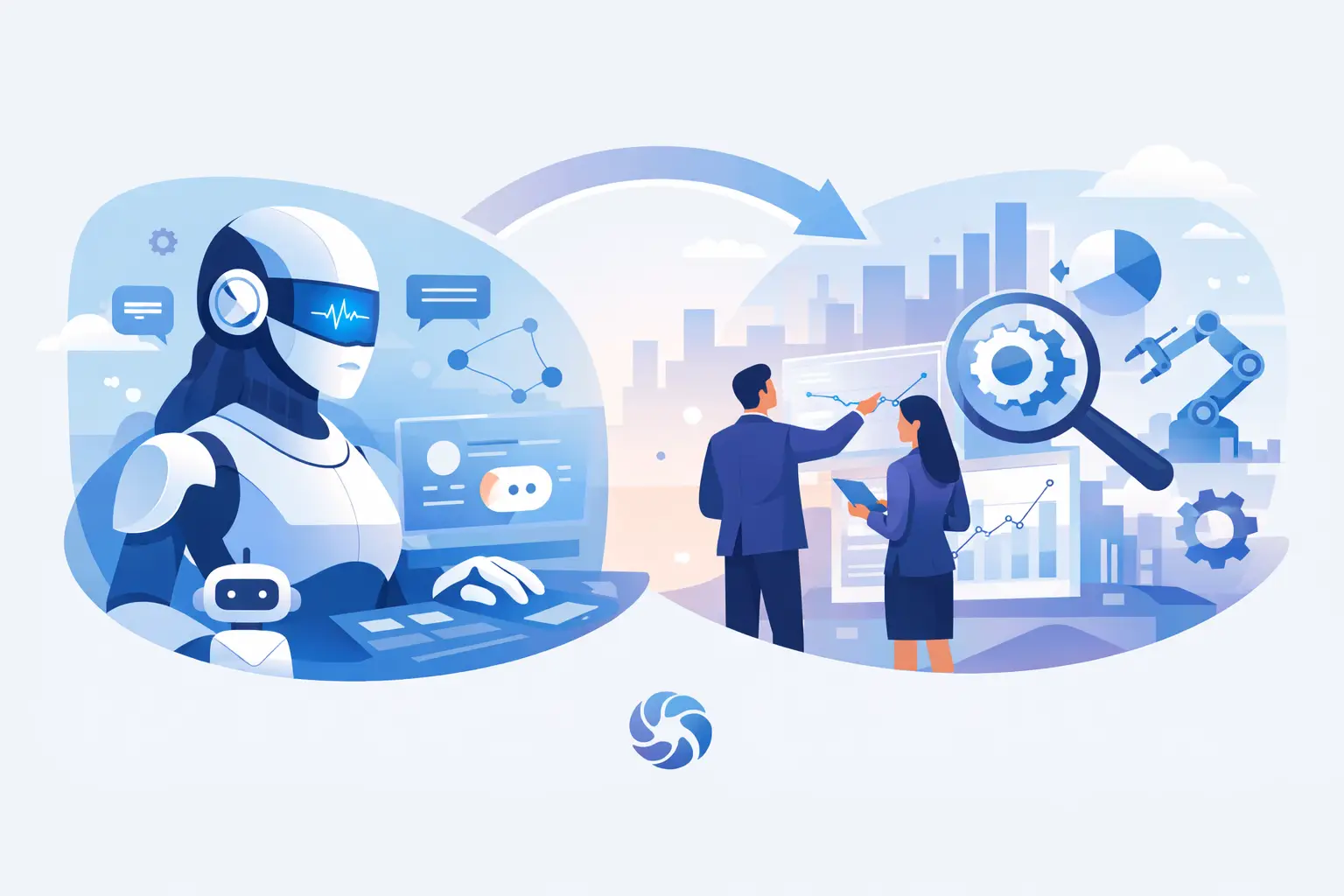
Most hospitality AI tools stop at answering questions. That sounds useful until service gets busy and the real issues show up: a server misses an allergen detail, a new hire fumbles an upsell, a manager learns too late that pre-shift standards were never reinforced. From AI Assistant to Operational Intelligence is the shift that matters, because operators do not need another chatbot. They need control.
In hospitality, knowledge gaps are rarely isolated. They show up as lost covers, weak check averages, inconsistent service language, failed audits, avoidable comps, and managers spending half their shift repeating the same instructions. A tool that replies to staff prompts may reduce some friction, but it does not give leadership a reliable view of what the team knows, what they missed, and where performance is drifting.
What changes when AI becomes operational intelligence
An AI assistant is reactive. A bartender asks how to describe a cocktail, a server checks an allergy protocol, or a host looks up a private dining policy. Useful, yes. But reactive support alone does not build consistency across outlets, shifts, and manager teams.
Operational intelligence does more. It captures the questions staff are asking, identifies repeated weak points, ties those gaps to training, and turns frontline activity into management visibility. That is a different category of value. Instead of helping one employee in one moment, it helps leadership correct patterns before they hit guest experience or revenue.
For a hotel restaurant, banquet operation, or multi-unit group, this distinction is not academic. If ten team members keep asking about modifiers, pairings, or allergy procedures, that is not a support issue. It is a training and risk issue. If pre-shift briefs are inconsistent, the problem is not communication alone. It is operational discipline.
From AI Assistant to Operational Intelligence in hospitality
Hospitality has always been won or lost in the handoff between standards and execution. SOPs can be documented perfectly and still fail on the floor. The reason is simple: most systems store information, but very few systems tell you whether teams can apply it under pressure.
That is where operating intelligence becomes commercially relevant. It connects staff knowledge support with onboarding, pre-shift communication, checklists, and audit readiness. It also gives managers a clearer line of sight into whether standards are actually landing.
Consider a common dinner-service scenario. A new server knows the menu basics but hesitates on modifier policy, wine pairing language, and a guest allergy question. A traditional LMS cannot help in the moment. A static checklist will not surface the knowledge gap. A generic AI assistant may answer the question, but it leaves management blind. The operator still does not know whether this is a one-off issue or a pattern affecting half the team.
Operational intelligence closes that loop. It supports the staff member in real time, logs recurring confusion points, flags where onboarding is weak, and gives leaders evidence to sharpen tomorrow’s pre-shift or retrain the outlet before standards slip further.
Why operators should care about the data behind the question
The answer matters, but the pattern matters more. Repeated staff questions tell you where revenue is leaking and where compliance exposure is building.
If servers repeatedly ask about premium pours, add-ons, or tasting menu substitutions, upselling is underdeveloped. If teams keep checking allergen content or cross-contact procedures, guest safety is carrying unnecessary risk. If outlet managers are completing checklists without clear follow-through, leadership visibility is weaker than it appears.
This is the operational blind spot many hospitality businesses still accept as normal. They measure sales after the shift, guest feedback after the meal, and audit performance after the issue. By then, the cost has already landed.
A stronger system acts earlier. It turns frontline interactions into leading indicators. That gives owners, F&B directors, and GMs a chance to intervene before the business pays through lower average checks, inconsistent service, or failed compliance standards.
The management layer most AI tools miss
Hospitality operators do not just need staff support. They need manager accountability.
That means knowing whether pre-shift briefs are happening with quality, whether checklists are completed with discipline, whether onboarding is consistent across outlets, and whether audit readiness is improving or being assumed. A true operating system should show where managers are driving standards and where they are simply staying busy.
This is why purpose-built platforms matter more than generic software. A hospitality team does not operate like a back-office department. It works across multiple shifts, mixed experience levels, high turnover, multilingual communication, and live guest pressure. The right system has to support execution at floor level while giving leadership enough visibility to coach, correct, and enforce standards.
SmartHospitality.AI is built around that reality. Not as a novelty layer on top of operations, but as part of the daily nervous system for food and beverage teams.
What good looks like
The goal is not more dashboards. It is fewer preventable failures.
Good looks like a new hire getting the right answer in seconds, while the leadership team sees that the same question has surfaced twelve times this week and updates training accordingly. It looks like pre-shift briefings reinforcing tonight’s priorities based on actual operational weak points. It looks like audit readiness being tracked as a living performance condition, not a scramble before inspection. It looks like manager visibility extending beyond task completion into team readiness.
That is the real move from AI Assistant to Operational Intelligence. In hospitality, the value is not in sounding innovative. The value is in reducing firefighting, protecting guest trust, and giving operators tighter control over the standards that drive revenue.