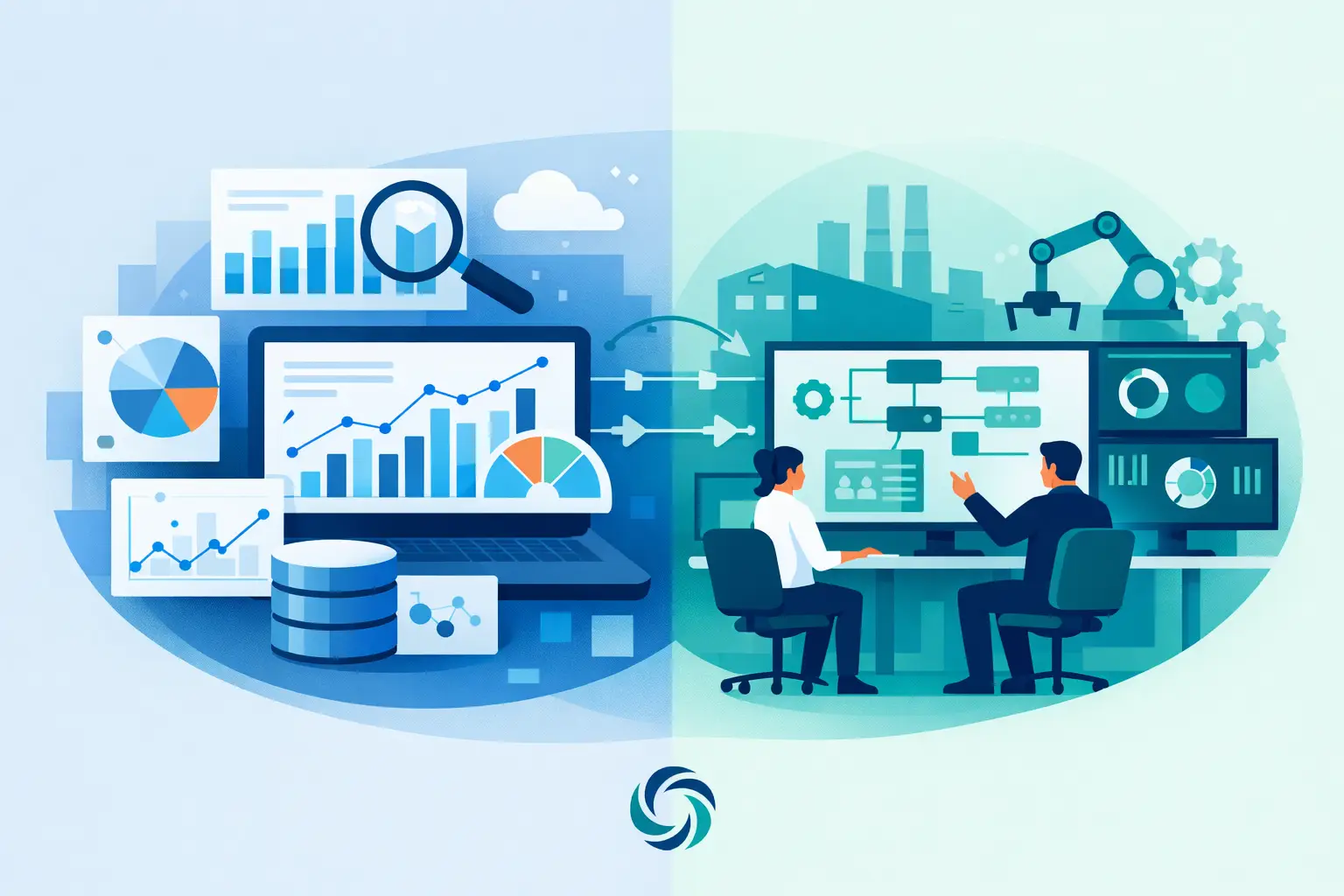
Most hospitality leaders are not short on data. They are short on clarity. Sales reports, labor percentages, guest feedback, audit logs, training records, and checklist completion rates pile up fast. But The Difference Between Data and Operational Intelligence is simple: data tells you what happened, while operational intelligence tells you what to do next, who needs support, and where revenue or risk is building in real time.
That distinction matters on the floor. A weekly report might show beverage attach rate is down 8 percent. Useful, yes. But it does not tell you whether servers are unclear on pairing recommendations, whether pre-shift briefings are inconsistent, whether a new menu item is confusing the team, or whether one outlet manager is coaching well while another is missing the issue entirely. Operational intelligence connects those dots before the problem becomes a bad month.
What data looks like in hospitality
In most restaurant and hotel F&B environments, data is everywhere. POS trends, labor costs, voids, comps, covers, average check, guest complaints, mystery shop scores, allergen incidents, and training completion rates all sit in separate places. On paper, that sounds like visibility. In practice, it often creates delay.
Data on its own is historical and fragmented. It can confirm that banquet beverage sales missed target, room service modifiers are being entered incorrectly, or one outlet has higher complaint volume than the others. What it usually cannot do alone is explain the operational cause with enough speed for a manager to intervene during service, before audit exposure or lost revenue compounds.
This is where many operators get stuck. They have dashboards, but still spend their day chasing answers, repeating instructions, and correcting preventable mistakes.
The difference between data and operational intelligence in practice
Operational intelligence is data made usable at the moment of execution. It translates signals into action across training, service readiness, compliance, and manager accountability.
In hospitality terms, that means you are not just tracking whether staff completed training. You know whether they actually understand menu details, allergen procedures, upsell prompts, and service standards before they face a guest. You are not just seeing checklist completion. You can spot whether completion is meaningful, whether standards are slipping by shift or outlet, and where leaders are allowing risk to sit unchecked.
A good test is this: if a piece of information does not help a manager coach, prevent, assign, escalate, or improve performance today, it is probably just data.
Operational intelligence sits much closer to the daily nervous system of the business. It helps answer practical questions such as:
- Which team members are least prepared for tonight's menu changes?
- Where are allergen knowledge gaps creating exposure?
- Which outlet manager is consistently late on pre-shift execution?
- Why is upselling weak in one dining room but not another?
- Where is audit readiness at risk before an inspection happens?
That is a different category of visibility. It is operational, not observational.
Why hospitality businesses need more than dashboards
Hotels, restaurants, and multi-outlet F&B groups operate in a high-variance environment. Staff turnover is constant. Teams are multilingual. Menu changes are frequent. Banquet details shift by the hour. Guest expectations are high, and small failures move quickly from service issue to online review, compensation cost, or compliance event.
In that environment, historical reporting is necessary but not sufficient. If a server does not know the difference between two wine profiles, the revenue loss happens table by table. If a team member guesses on an allergen question, the risk is immediate. If managers deliver inconsistent pre-shifts, service standards drift long before a monthly KPI review catches it.
Operational intelligence closes the gap between knowing and acting. It turns management from reactive firefighting into controlled execution.
Where operators feel the difference fastest
The fastest gains usually show up in four areas: staff readiness, manager visibility, audit preparedness, and revenue capture.
Staff readiness improves when knowledge gaps are visible before service. Instead of assuming onboarding was completed, leaders can see whether the team is actually prepared to answer guest questions, sell with confidence, and follow policy.
Manager visibility improves when leadership can compare execution across outlets, shifts, and supervisors. This matters in multi-unit operations where one strong manager often hides a weaker one.
Audit preparedness improves when compliance is tracked as a live operating condition, not a last-minute scramble. In hospitality, checklists completed without understanding are not protection.
Revenue capture improves when product knowledge, service prompts, and pre-shift focus are tied to performance outcomes. Upselling is rarely just a motivation problem. More often, it is a knowledge and execution problem.
What strong operational intelligence should include
For hospitality teams, operational intelligence should connect frontline knowledge, daily routines, and leadership oversight. If those pieces live in separate systems, the operator still ends up stitching the story together manually.
That is why platforms built for the floor matter. A purpose-built system like SmartHospitality.AI is designed to turn training, staff questions, checklists, briefings, audit scoring, and manager performance into one operating view. That matters because hospitality problems rarely exist in silos. Weak onboarding affects service confidence. Weak service confidence affects upselling. Weak manager follow-through affects both.
The trade-off is that not every business needs the same depth on day one. A single independent outlet may start by improving pre-shift discipline and menu knowledge. A hotel with banquets, room service, bars, and multiple restaurants will need broader visibility across teams, outlets, and leaders. The principle stays the same: information must lead directly to action.
For operators, the standard is not whether you can produce reports. It is whether your managers can use what they see to protect revenue, reduce risk, and keep standards intact during a live service. That is where operational intelligence earns its name.